
Wed 2026-09-09
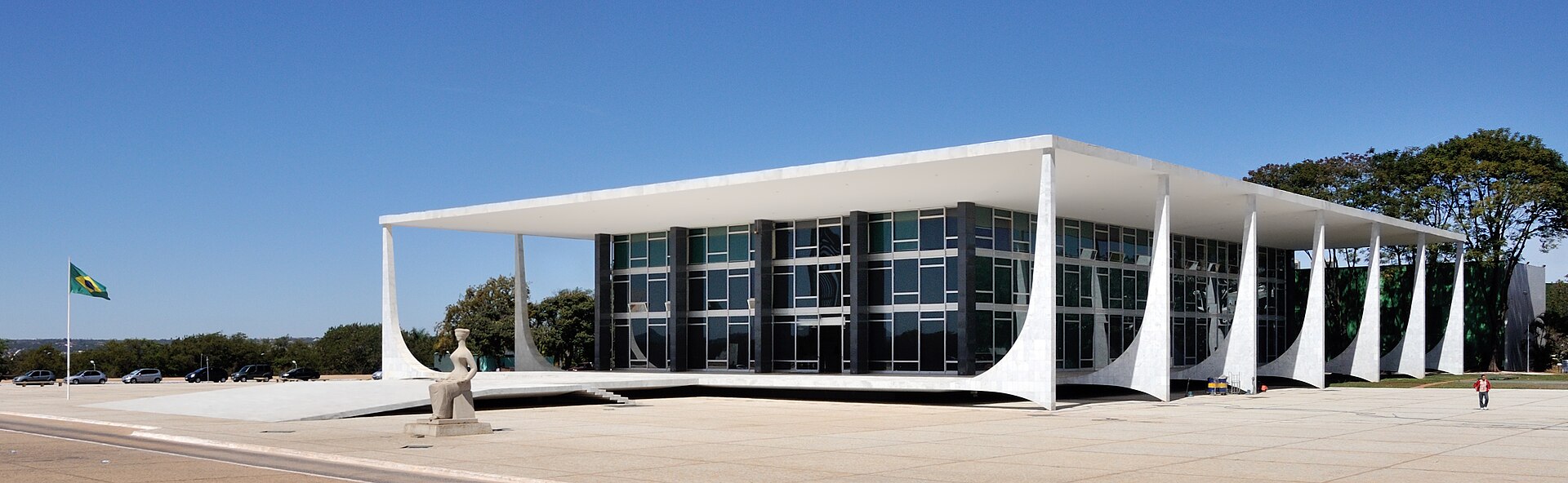
On Tuesday, Sep. 8, 2026, Justice André Mendonça suspended Federal Police director-general Andrei Rodrigues and intelligence director Leandro Almada. Mendonça, the rapporteur on the Banco Master and INSS files, said police intelligence had monitored him for more than 30 days. He said Rodrigues had sent Supreme Court Justice Alexandre de Moraes at least six intelligence reports produced between Aug. 3 and Aug. 31. He called it illicit monitoring of a sitting justice and ordered immediate criminal and disciplinary inquiries inside the Federal Police. The police did not comment to Reuters. The removal is preventive. It is not a conviction.
The Second Chamber was called the same day. Within minutes, Justices Kassio Nunes Marques and Luiz Fux voted with Mendonça — a majority of the five-member panel. Justice Gilmar Mendes asked for more time, a vista, and said the order could unbalance the election and belongs in the full court. The suspension stands until Chief Justice Edson Fachin rules. William Marcel Murad, the executive director, took interim command. Eleven of 13 directors signed a note backing Rodrigues and Almada and offering their own posts. Murad and Almada did not sign.
In the evening the Attorney General’s Office, signed by Jorge Messias, asked Fachin to suspend the injunction at once. The petition cited “grave injury to public and administrative order” and a frontal violation of the president’s exclusive power to name and remove the police chief. Messias and Justice Minister Wellington Lima e Silva had seen President Luiz Inácio Lula da Silva at the Alvorada, then Fachin, that afternoon. Fachin set 72 hours for Mendonça to answer. The file then returns to the presidency.
Lula’s public line, as Folha reported it, is institutional. He is not attacking Mendonça by name. Institutional Relations Minister José Guimarães called the measure electoral. The first round is next month. Reuters notes recent polls with Lula and Flávio Bolsonaro neck and neck. Ally talk of a trap is not established here. This is Tuesday’s order — not a replay of the Master messages, and not Monday’s crowds.
Why it matters: A month before a tied presidential election in Latin America’s largest democracy, one justice has taken the federal police chief off the job. The court president is now the clock on whether that sticks. Who commands the federal police is the question foreign capitals read when they ask whether Brazil’s institutions still hold.
“Trata-se de monitoramento ilícito de ministro da Suprema Corte.” — “This is illicit monitoring of a justice of the Supreme Court.” — Justice André Mendonça, as Valor reported Sep. 8.
“viola frontalmente a prerrogativa constitucional privativa do presidente da República para prover e desprover cargos de direção da Polícia Federal.” — “It frontally violates the constitutional prerogative reserved to the president of the Republic to appoint and remove leadership posts in the Federal Police.” — Jorge Messias, as Folha and G1 reported Sep. 8.
U.S. Southern Command said Tuesday, Sep. 8, 2026, that Joint Task Force Western Hemisphere sank the Ecuadorian fishing boat Don Rufo in the eastern Pacific. It is the sixth Ecuadorian vessel SOUTHCOM has destroyed since Aug. 28. The post on X, with video, called the boat a floating fuel station for Los Choneros, the Ecuadorian group Washington has designated a terrorist organization and ties to Mexico’s Sinaloa cartel. SOUTHCOM said the people taken off the boat were transferred to Ecuadorian authorities, then the vessel was sunk. It says the series has been run in coordination with President Daniel Noboa’s government.
Primicias listed the six named sinkings since Aug. 28: Los Tres Hermanos, Conquista 2, OM2, María Candelaria, Montecristi, Don Rufo. The last four fell inside a week. The Ecuadorian Navy’s own communiqué, reported by Primicias on Sep. 8, does not match a clean handoff. The Navy said it received 28 crew in all — 22 from Montecristi and six from Don Rufo — and that ten Don Rufo crew had moved away from the scene of the intervention. Search remains open. A clean handoff of a full 16-person crew is not what the Navy reported. SOUTHCOM’s sentence covers those removed. The Navy’s count is the local record on who came ashore.
Ecuadorian judges have already cut against earlier cases. On Saturday a judge freed 28 crew from two boats for lack of a crime. On Tuesday, 32 men from Conquista 2 and María Candelaria were released on conditions after arriving in Manta on Monday. Their lawyer, Steven Alvia, said prosecutors had no evidence. The strike landed the night before Secretary of State Marco Rubio’s Quito meetings. The still-unresolved January Fiorella disappearance near the Galápagos is a separate case, not part of the Don Rufo count. One local report puts the intercept about 327 nautical miles off Manta. SOUTHCOM’s recap does not state a position, so that mileage is not the record.
Why it matters: The Pacific boat campaign is now a weekly kinetic fact, timed to the U.S. secretary of state’s arrival in the country whose fishermen are being sunk and then released by their own courts.
“Los individuos retirados del buque han sido transferidos a las autoridades ecuatorianas.” — “The individuals removed from the vessel have been transferred to Ecuadorian authorities.” — SOUTHCOM on X, as carried by EFE / El Universal and Primicias, Sep. 8–9.
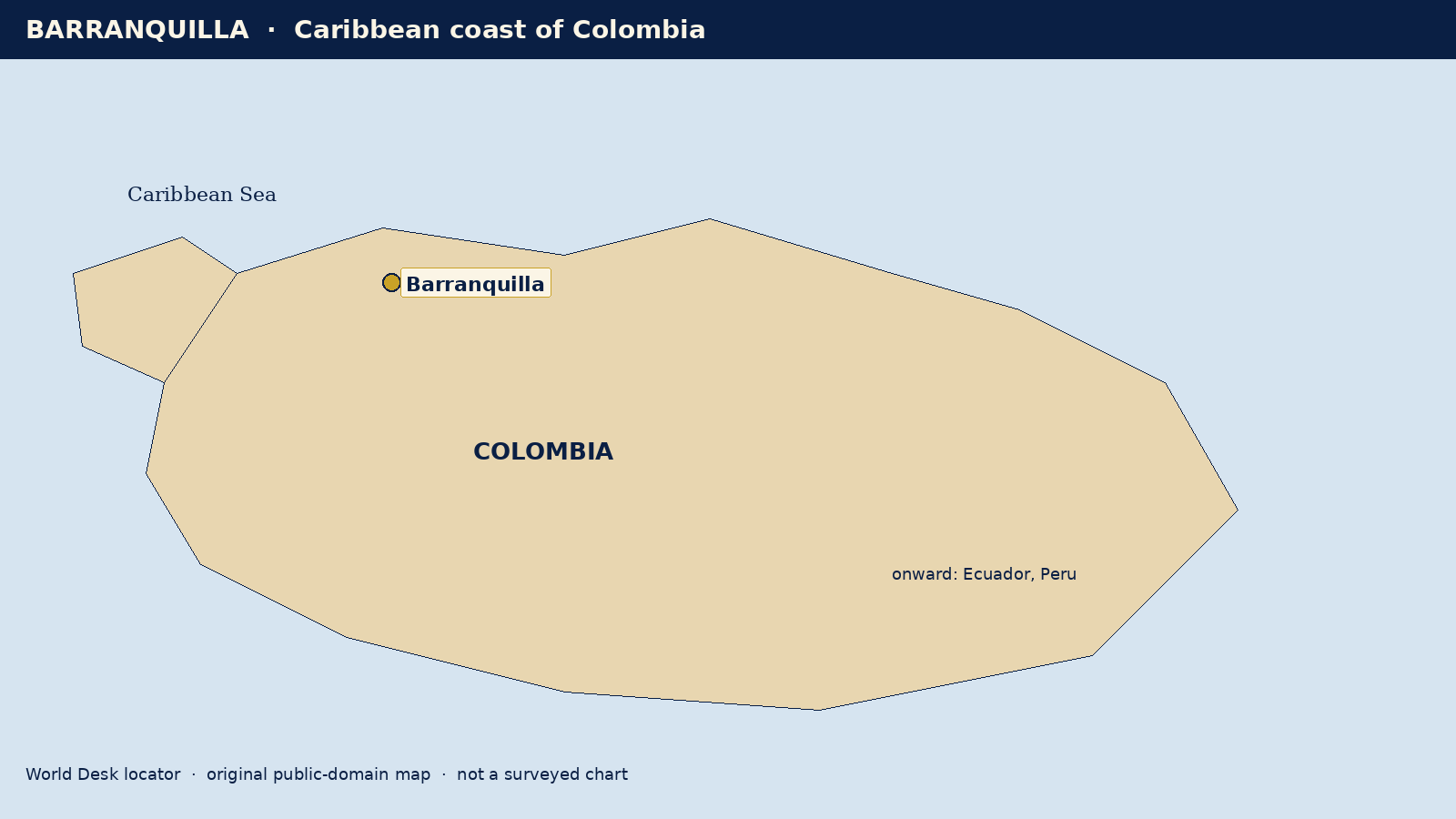
The State Department’s Sep. 8 public schedule said Secretary Marco Rubio, on travel to Colombia, Ecuador, and Peru from Sep. 8–10, met Colombian President Abelardo De La Espriella in Barranquilla. He took part in a signing ceremony for Strategic Civil Nuclear Cooperation and Critical Minerals Framework memorandums of understanding with De La Espriella and Foreign Minister Omar Bula Escobar. Those two papers are the locked ceremony. State has not published a remarks transcript.
America First foreign policy is supposed to start in the neighborhood. Rubio is spending the middle of an Iran flare-up on a three-country swing the State Department announced to strengthen “key U.S. partnerships in our region.” The travel note said he would meet the new De La Espriella government in Colombia, President Noboa in Ecuador, and the new Fujimori government in Peru — to talk earthquake help, a shared fight against narcoterrorism, and deeper commercial ties — and to reaffirm a secure, prosperous, democratic Western Hemisphere. Nuclear fuel and the metals inside missiles, phones, and power grids are how a hemisphere stays out of Beijing’s supply chain.
What Rubio did say, on the record, El Tiempo locked on Sep. 8. Asked about a U.S. military base, he told reporters this is sovereign Colombian territory: “nosotros podemos abrir una base militar, hay que invitarnos a hacerlo, hay que estudiar a ver si eso es factible” — “we can open a military base; they have to invite us to do it; we have to study whether that is feasible.” He added that such sites are often shared bases, that any proposal would need Colombian authorities, and that the Department of War would still have to study feasibility and cost. He announced no base and no date. That is the stop: the door is open only if Bogotá asks. Americas is not running this stop.
Why it matters: A U.S. secretary of state, while a Gulf war is burning munitions, is locking civil-nuclear and minerals papers with a new government in the hemisphere — and putting a military base behind an invitation and a cost study, not a ribbon-cutting. The partnership is signed. The base is not.
“nosotros podemos abrir una base militar, hay que invitarnos a hacerlo, hay que estudiar a ver si eso es factible” — “we can open a military base; they have to invite us to do it; we have to study whether that is feasible.” — Secretary Marco Rubio, press conference after the Barranquilla meeting, as El Tiempo (Laura Nathalia Quintero) reported Sep. 8, 2026, 18:39. Translation of that El Tiempo quote.
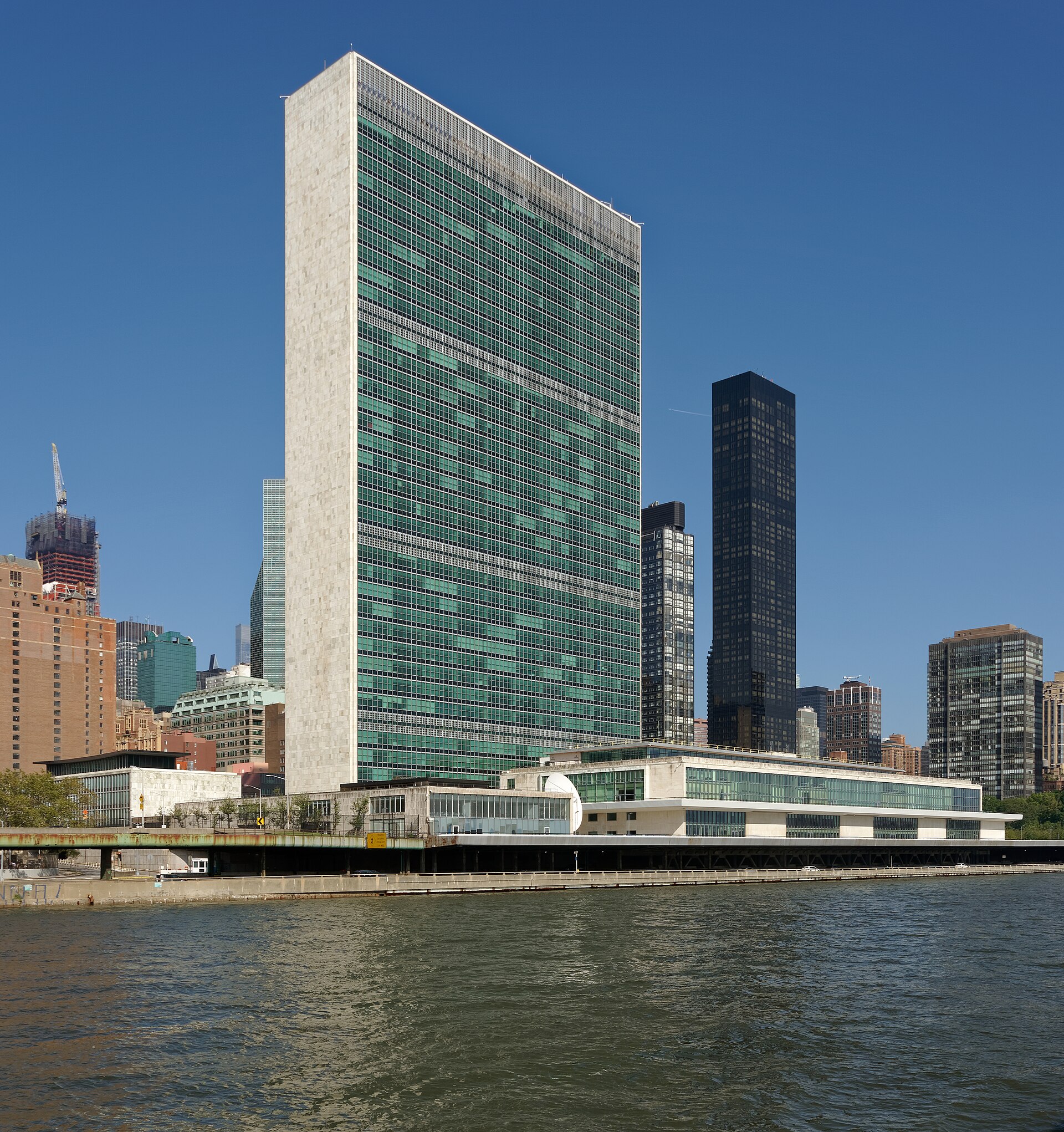
A previously unpublished December 2025 review by the USAID inspector general, provided to the Washington Free Beacon by Sen. Chuck Grassley’s office, found “major deficiencies” in the United Nations’ internal investigation of 19 UNRWA employees accused in the Oct. 7 attack. Investigators never asked whether those staff were members of Hamas. They rejected intercepted Hamas communications because they could not be “independently confirmed.” The Washington Free Beacon reported the review on Sep. 8, 2026.
UNRWA is the U.N. agency for Palestinian refugees. After Israel said some of its Gaza staff joined Hamas’s Oct. 7, 2023 attack, the U.N. Office of Internal Oversight Services looked at 19 employees. OIOS found the evidence “insufficient to support” involvement in 9 of those 19 cases. The Free Beacon says that finding let the U.N. claim the agency had been cleared and Israeli intelligence overstated. The USAID inspector general, a statutory watchdog that still exists after USAID itself was wound down, reviewed that U.N. probe at Congress’s request and reached the opposite conclusion: the U.N. set an “impossibly high” standard, then used it to dismiss staff with ties to Hamas operations.
The inspector general’s own words, as the Free Beacon published them: OIOS “did not review whether the UNRWA staff members were current or former members of Hamas.” OIOS said it was “unable to independently authenticate” Israeli-collected material. The IG called that unreasonable — the files were “collected enemy materials” taken from Hamas, a designated terrorist organization, so no outsider could authenticate them — and said it “has found no evidence to suggest that the authenticity of the materials collected by the Israeli government should be questioned.” Where UNRWA did fire people, the IG warned the firing language still lets them “seek further employment with other NGOs or U.N. organizations” that may get U.S. money. The IG’s wider dragnet now covers more than 1,500 UNRWA-linked individuals. UNRWA has “voluntarily fire[d] 70 staffers to date.”
Grassley, the Iowa Republican who chairs Senate Judiciary, sent Aug. 27 demand letters to U.N. Secretary-General António Guterres and Secretary of State Marco Rubio. Copies went to the Free Beacon. He wants unredacted OIOS records and a check that “U.S. taxpayer dollars are not used to fund Hamas or other terrorist groups.” He also told Rubio the IG has referred more than 100 UNRWA employees for a federal blacklist and “only 1 individual has been included.” A U.N. spokesman confirmed receipt of the Guterres letter and said only that it “will be answered.” A State Department spokesman, on the record: “no State Department funding will be provided to UNRWA… The Administration has determined UNRWA is irredeemably compromised and now seeks its full dismantlement.” State would not discuss the IG findings and does not comment on congressional correspondence.
Why it matters: UNRWA is how much of the world still moves food and salaries in Gaza. Washington is not asking for a reform memo. It is asking allies to dismantle the agency, while the IG says fired Hamas-linked staff can still walk into other aid groups that spend U.S. money. That is a donor-confidence fight in every Western capital that has not yet cut the check off.
“no State Department funding will be provided to UNRWA… The Administration has determined UNRWA is irredeemably compromised and now seeks its full dismantlement.” — State Department spokesman, as the Washington Free Beacon reported Sep. 8, 2026.
On Tuesday, Sep. 8, 2026, the Trump administration asked the Supreme Court to lift a lower-court order that blocks a modified SAVE system — the Systematic Alien Verification for Entitlements database — from combining Social Security information with citizenship records so states can check voter eligibility. The Washington Examiner reported the ask the same day, at 1:04 p.m. ET. Jack Birle wrote the piece. This is not the mail-ballot fight already on cable. That case is about the Postal Service and ballot envelopes. This one is about whether Washington may match Social Security files to citizenship files before a state puts a name on the rolls.
SAVE is a federal database the government already used to check whether someone is a citizen when they apply for benefits. Last year the administration changed it so citizenship records and Social Security data sit together, which it says makes a citizenship check faster and more reliable for elections. Left-leaning groups sued, arguing the change broke privacy laws and other federal statutes. A federal district judge in June agreed with the groups. A federal appeals panel affirmed that ruling last week. The administration wants the Supreme Court to pause those orders so the system can run for the November midterms.
Solicitor General D. John Sauer told the Court to halt what he called an “indefensible order.” He said it “threatens the integrity of upcoming elections” by unlawfully limiting the federal government’s authority to use Social Security data. The Examiner does not name the plaintiffs, the district judge, or the docket number.
Why it matters: Allies treat a clean American midterm as evidence the country can still wage a war and run an election in the same season. A citizenship check that uses Social Security data is the administration’s answer to the fraud argument — and, if the courts keep it dark, the answer it will not have on Nov. 3.
“threatens the integrity of upcoming elections” — Solicitor General D. John Sauer, as the Washington Examiner reported Sep. 8, 2026, describing the lower-court order he asked the Court to halt.
On Sep. 8, 2026, President Donald Trump signed an order that takes the Defense Production Act’s energy authorities away from the Energy secretary alone and gives them to the Interior and Energy secretaries, each acting on their own. Any energy dispute that touches national-defense infrastructure or military operations goes to the National Energy Dominance Council and the National Security Council, both of which must coordinate with the Department of War. The White House published the order the same day. The document uses “Department of War.” The order does not name the secretaries.
The Defense Production Act is the Korean War statute presidents use to force industry to prioritize tanks, fuel, minerals, and other war goods. Executive Order 13603, from 2012, is the standing map of who may use those powers. This order amends that map, and amends a March 13, 2026 order that had already adjusted the same delegations.
The signed text strikes “the Secretary of Energy with respect to all forms of energy” and inserts “the Secretary of the Interior and the Secretary of Energy with respect to all forms of energy under their purview, each of whom may exercise such delegated authority independently of the other.” A matching change does the same for energy production, construction, distribution, and use. Section 101(c) of the Act, the priority-and-allocation power, is now delegated to Interior, Commerce, and Energy, again each independently. A dispute between the two secretaries over any form of energy goes first to the National Energy Dominance Council — unless it “implicates national defense infrastructure or military operations,” in which case it “shall be referred to both the National Energy Dominance Council and the National Security Council, each of which shall coordinate with the Department of War in the course of resolving the matter.” Publication costs are assigned to the Department of the Interior.
Why it matters: The United States is in a shooting war with Iran and still arming Ukraine. Who can commandeer fuel, power, and minerals — and who breaks a tie when that order touches a military operation — is how a wartime industrial base actually works. This is the White House putting Interior beside Energy on that switch, and putting the Department of War in the room when the fight is about the fight.
“the Secretary of the Interior and the Secretary of Energy with respect to all forms of energy under their purview, each of whom may exercise such delegated authority independently of the other.” — presidential order, The White House, Sep. 8, 2026.

On Sep. 8, 2026, the U.S. Treasury’s Office of Foreign Assets Control sanctioned 36 targets supporting Iran’s aviation sector, including 27 Iranian airlines designated for operating in that sector. It suspended three Iran-related aviation authorizations that had allowed overflights, and that had allowed non-U.S. airlines to fly U.S.-origin or U.S.-controlled commercial aircraft into Iran. Safety-related requests will be considered case by case. Ordinary permission for the world’s jets to treat Iranian skies and runways as open is what ends. This is the first wave of airline designations under the Aug. 24 aviation-sector determination, part of Operation Economic Outcast. It is not the Sep. 4 Golden Global bank designation, and not the license wind-down already filed. It is the aviation door.
Commercial jets are how a sanctioned state still moves people, cash, and cargo when banks close. Treasury says the Islamic Revolutionary Guard Corps has long used airlines that look private — Mahan Air among them — to ferry personnel and weapons. Secretary Scott Bessent, as Treasury published it, said the department had promised severe consequences for anyone giving the Iranian regime a financial lifeline, and followed through on companies that still support Mahan Air. Anyone doing business with Iran’s remaining airlines — all of which we sanctioned today — risks being cut off from the global financial system.
OFAC also named third-country helpers. It said UAE-based ECT Aviation Support and Türkiye-based Sky Phoenix acted as intermediaries in a scheme to move at least three Boeing 777s to Mahan Air in summer 2026, via temporary registrations. Cargo and sales agents in Türkiye, Malaysia, and Kazakhstan were designated for servicing Mahan Air flights, including unmanned-aircraft components. FinCEN issued an alert asking banks to report aviation-procurement networks. Treasury did not publish a count of flights now cancelled.
Why it matters: Grounding a country’s remaining airlines, and the foreign shops that still feed them aircraft, is how Washington closes a logistics lifeline while the Hormuz war is already rewriting energy trade. For a reader who has never heard of OFAC: this is how a superpower closes an airport without dropping a bomb — by making the tickets, the spare parts, and the bank wires illegal.
“all of which we sanctioned today” — Secretary Scott Bessent, as the Treasury press release published Sep. 8, 2026, on Iran’s remaining airlines. The same release: the department promised severe consequences, and followed through on companies still supporting Mahan Air; anyone doing business with those airlines risks being cut off from the global financial system.
On Sep. 8, 2026, Handelsblatt reported new figures from storage lobby INES: German gas stores are about 53 percent full, the lowest for this time of year in 15 years. Even a technical maximum of 77 percent by Nov. 1 looks unlikely. A winter as cold as 2010 would empty stores by the end of January, with daily shortfalls above 25 percent on some days. INES said reaching 77 percent by Nov. 1 would require injecting more gas in the next two months than in the past three combined — which it called unlikely. A normal winter, on that path, would still leave stores near 38 percent by April 1.
The same day, Handelsblatt reported a ministry paper, first noted by Reuters, that sees no need for state intervention. The economy ministry said a physical shortage is not expected on current evidence. Security depends on stores plus pipeline and LNG imports and demand. It said 60 to 70 percent at the start of winter plus imports should cover expected demand. It blamed slow filling on high, jumpy prices from the Middle East war, and called that a price-and-volatility risk, not a shortage. Winter prep, it said, sits with gas companies and traders. The ministry and INES do not agree. This is Tuesday’s new scenario set, and Berlin’s answer the same afternoon.
Why it matters: Europe’s industrial core is heading into heating season with thin caverns while a Gulf war keeps gas expensive — a household and factory risk that travels into every supply chain that still runs through Germany.
„Energie: Neue Daten – bei kaltem Winter droht Kunden ein Gasmangel“ — “Energy: New data — a cold winter threatens customers with a gas shortage.” — Handelsblatt headline, Sep. 8, 2026.
On Sep. 9, 2026, Nikkei Asia reported that Volkswagen Group said it has signed a memorandum of understanding with India’s JSW Group for a joint venture, as the German automaker pursues an overhaul that could lead to 50,000 job cuts. India is the world’s third-largest auto market. A local partner is how a European carmaker that is cutting at home still tries to grow where the customers are. Nikkei said a completed venture would end Volkswagen’s search for an Indian partner. The memorandum is the start of talks, not a closed sale.
Indian trade press quoting a Skoda Auto Volkswagen India spokesperson the same day said the memorandum is non-binding, would be jointly controlled, and would explore a wider product range, deeper local content, and more manufacturing and research in India. That statement did not disclose shareholding or investment. The 50,000-cut figure is Nikkei’s description of the already-reported European overhaul, not a new India job claim.
Why it matters: Europe’s largest carmaker is pairing a painful home restructuring with a search for scale in Asia’s giant growth market — the same industrial map as chips, steel, and energy.
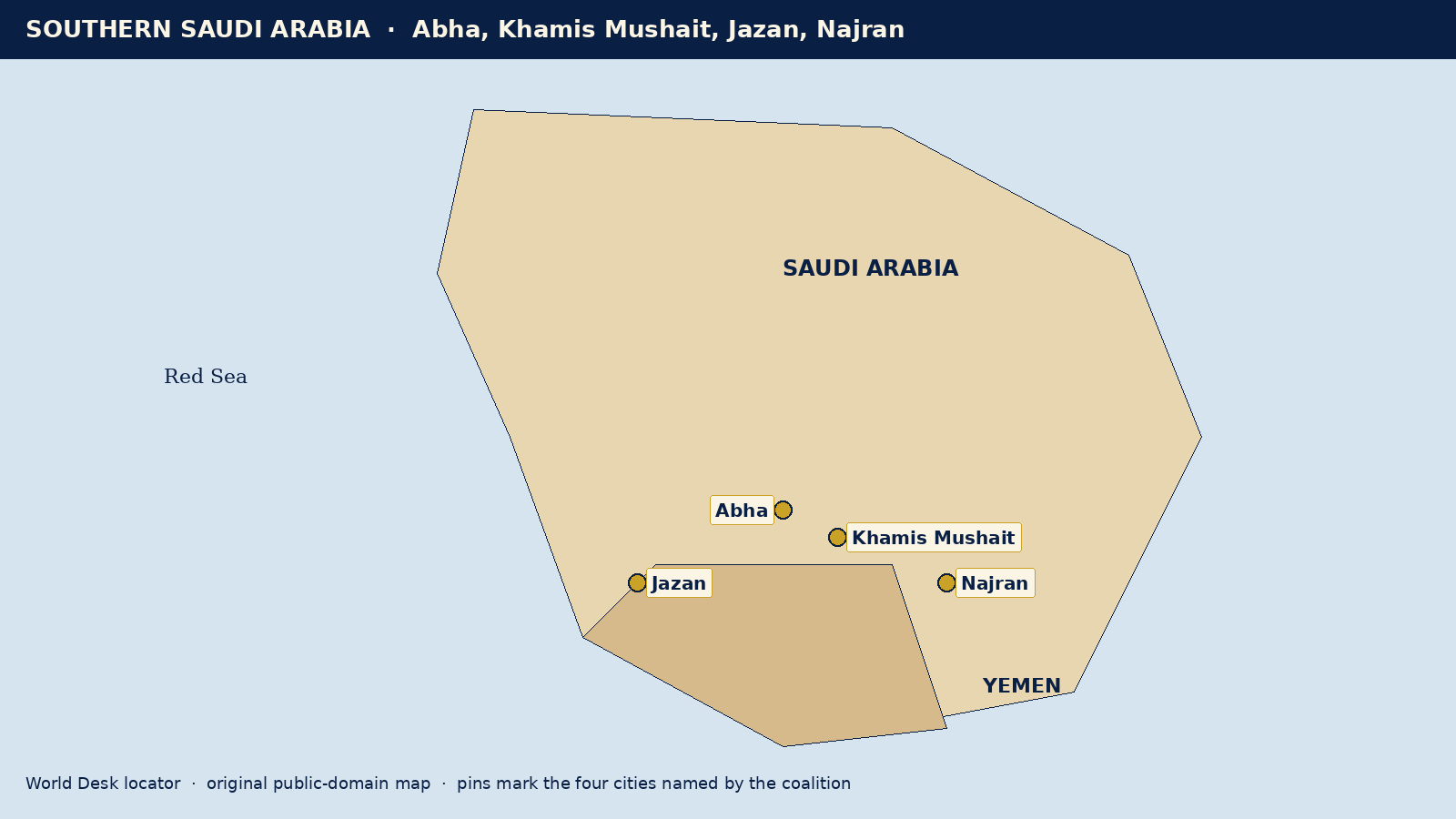
On Tuesday, Sep. 8, 2026, the Saudi-led coalition and the Saudi Foreign Ministry said Iran-backed Houthi attacks struck civilian and economic sites in Abha, Khamis Mushait, Jazan, and Najran, wounding 73 civilians including women and children. The Saudi Energy Ministry said fires broke out at southern energy facilities and some operations were temporarily halted. Coalition spokesman Maj. Gen. Turki Al-Malki called it a “dangerous escalation” and a “blatant violation of the Kingdom’s sovereignty,” and vowed the operational measures necessary to deter the militia and neutralize the sources of fire. Asharq Al-Awsat carried the coalition, the Cabinet, and Prince Faisal. Anadolu Agency carried the Energy Ministry and the Houthi claim. No death toll is stated. The civilian figure is 73 wounded.
Southern Saudi Arabia sits on the other side of the Yemen highlands. When the Houthis fire missiles and drones into those four cities, they are not only answering a battlefield inside Yemen. They are hitting a U.S. partner’s cities and energy plant — the same logic that already prices Red Sea shipping. Riyadh’s answer is political as well as military. The Cabinet, chaired by Crown Prince Mohammed bin Salman in Jeddah, said the kingdom will keep defending sovereignty, citizens, residents, and national assets, and ordered the highest medical care for the wounded. In Moscow the same day, Foreign Minister Prince Faisal bin Farhan told a joint news conference with Russia’s Sergei Lavrov that the Houthis had opened a door they cannot bear, that diplomacy remains open, and that Saudi Arabia will not hesitate to defend itself.
Egypt, the UAE, Jordan, and Qatar condemned the strikes. The UAE also tied them to continued Houthi attacks on commercial ships in the Red Sea. Treat Houthi spokesman Yahya Saree’s claim — “dozens” of missiles and drones, “precise” hits on Aramco sites and Khamis Mushait Air Base, “121” Saudi strikes in three days — as a claim carried by Anadolu, not as verified battle damage. Named facility damage is not locked. Independent confirmation of which sites were hit is not locked.
Why it matters: A militia that can burn the southern energy sites does not need to sink a tanker to move the cost of fuel. This is the first overnight lock of Houthi fire landing on Saudi cities and energy plant — a civilian wounded count, a named spokesman, Gulf condemnations, and Red Sea shipping in the same statements.
التحالف توعّد باتخاذ «الإجراءات العملياتية اللازمة لردع» الحوثيين بعد استهداف «أبها وخميس مشيط وجازان ونجران» وإصابة 73 مدنياً — the coalition vowed the “operational measures necessary to deter” the Houthis after strikes on those four cities wounded 73 civilians. — Asharq Arabic, coalition wrap.
“dangerous escalation” — Maj. Gen. Turki Al-Malki, as Asharq Al-Awsat reported in English, Sep. 8, 2026.
On Wednesday, Sep. 9, 2026, the Jordanian army said its air defenses engaged 20 ballistic missiles launched from Iran toward the kingdom, intercepted and destroyed 18, and that two fell in uninhabited areas, with no loss of life. Asharq Al-Awsat’s Arabic desk carried the army statement in the small hours, published 00:20 and updated 07:49.
Jordan is not a party to the tanker war in the Gulf, but Iranian missiles keep using its sky. That is a sovereignty fact for a U.S. partner that already hosts American forces. In the same Asharq piece, the Islamic Revolutionary Guard Corps claimed it was answering a base at Azraq. That Azraq line is an Iranian claim, not Jordan’s intercept count. How many missiles were aimed at Azraq, and what damage the two impact sites took beyond empty ground and no deaths, is not in the army statement.
Why it matters: A named Arab army, with hard numbers, overnight — a U.S. partner’s cities stayed standing while Iranian fire crossed a second front outside the strait.
«منظومات الدفاع الجوي الأردنية تعاملت مع 20 صاروخاً باليستياً أُطلقت تجاه الأراضي الأردنية (من إيران)، وقد جرى اعتراض وتدمير 18 صاروخاً منها بنجاح، في حين سقط صاروخان في مناطق خالية من التجمعات السكانية» — “Jordanian air-defense systems engaged 20 ballistic missiles fired toward Jordanian territory (from Iran); 18 were successfully intercepted and destroyed, while two fell in areas empty of population centers.” — Army spokesman via Asharq, Sep. 9, 2026. No loss of life.
On Tuesday, Sep. 8, 2026, the Lebanese army said its navy, with civil defense and the Red Cross, rescued 22 people from a boat that broke down off Tripoli while attempting an irregular crossing, and that the search for the rest of the passengers continued without a published total aboard. Asharq Al-Awsat carried the army statement, citing the army and AFP, at 19:57.
Tripoli is Lebanon’s northern port and a known jump-off for small boats aiming at Cyprus, less than 200 kilometers across the eastern Mediterranean, and then Europe. The army did not publish how many people were on the boat. Lebanon’s National News Agency, as carried by Asharq, said more than twenty of the passengers were Syrian and the others Lebanese. That split is the story’s point: Syria’s war emptied millions into Lebanon. Asharq cites UNHCR that about 1.12 million Syrians remain in Lebanon and that about 400,000 went back in 2025. Lebanese poverty since the 2019 collapse supplies the other half of the boat.
This is not a war lead. It is the human traffic that keeps moving when ceasefires and return statistics look tidy on a chart. The army did not give deaths, a final passenger count, or a destination beyond the usual Cyprus route. The number it did give is 22 rescued, with the search still open.
Why it matters: A named rescue on the eastern Mediterranean route that still carries Syrians and Lebanese toward Europe after the fall of Assad.
الجيش أنقذ «22 شخصاً أثناء محاولة تهريبهم بطريقة غير شرعية على متن مركب بعد تَعَطُّله قبالة شاطئ مدينة طرابلس» — the army rescued “22 people during an attempt to smuggle them irregularly on a boat after it broke down off the beach of Tripoli.” — Lebanese army via Asharq, Sep. 8, 2026. Work continued to rescue the remaining passengers; their number was not given.
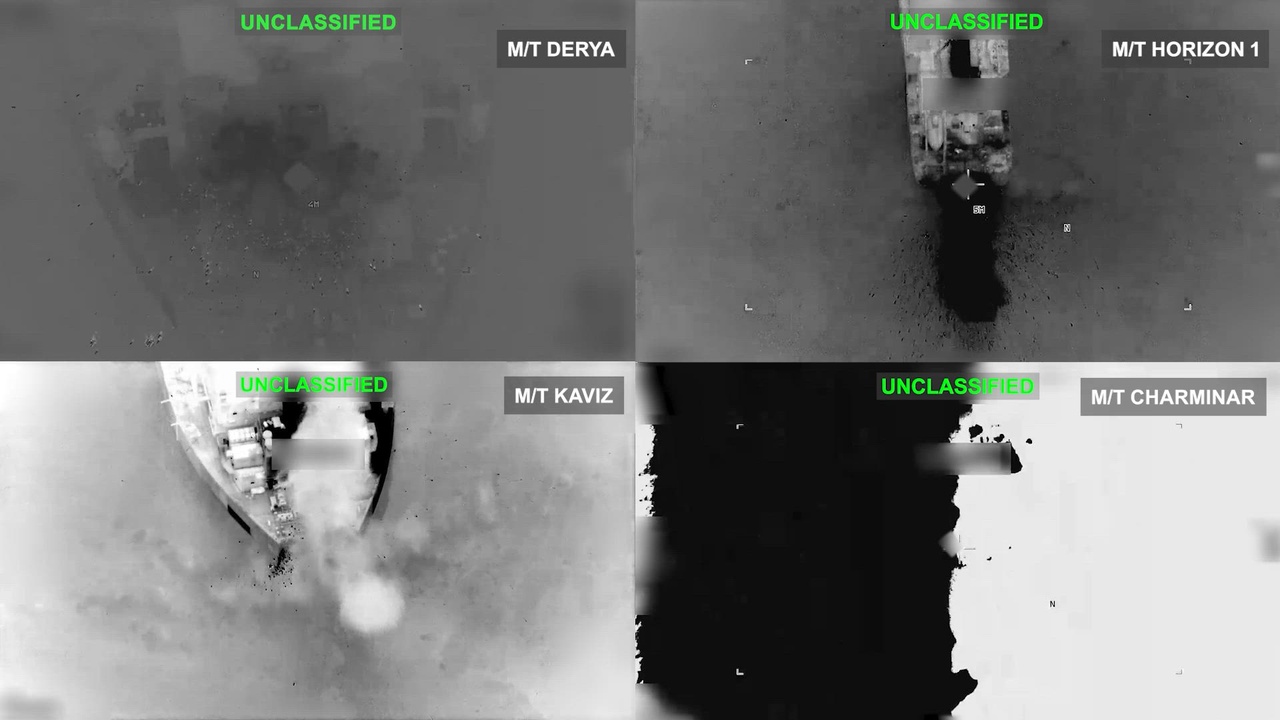
On Tuesday, Sep. 8, 2026, U.S. Central Command said American forces destroyed five Islamic Revolutionary Guard Corps crude carriers — M/T Kaviz, M/T Charminar, M/T Horizon 1, and M/T Riesco in the Gulf of Oman, and M/T Derya near Kharg Island — after the IRGC targeted a U.S. Navy warship with ballistic missiles twice in two days. The warship evaded both tries. No American personnel were harmed. Crews were told to abandon ship before the hulls were struck and rendered inoperable. CENTCOM posted the statement from Tampa. The name of the warship that evaded is not in the statement.
CENTCOM called the five ships part of the same multibillion-dollar shadow network that funds the IRGC and its proxies. It said Iran has no means to defend them. This is the second tanker night in four days. On Sep. 5 CENTCOM destroyed three IRGC crude carriers after missiles at a carrier and a destroyer. Count the new five on top of those three. They are a separate night. Secretary of State Marco Rubio, in Colombia early the next day, put the rule in one line: Iran keeps trying to hit U.S. Navy ships, and every time it does, or tries, it loses tankers.
Iranian state media confirmed a hit near Kharg, which before the war handled about 90 percent of Iran’s oil exports, and said the crew was evacuated. IRIB also said a second tanker was hit near Jask. The IRGC later said five tankers were targeted. Those lines match the American list. The Guards claimed “fierce missile strikes” on Al Azraq and claimed hangars for U.S. fighters were destroyed. They also claimed ballistic hits on the U.S. destroyers DDG-119 and DDG-53, then said they had struck two American vessels and eight tankers in what they call a prohibited stretch of Hormuz, with “great damage.” Al Jazeera reported no immediate U.S. comment on those ship claims. The hangar line and the DDG hits are claims, not established hits. Iran’s Foreign Ministry called the tanker strikes a violation of the U.N. Charter and a “war crime.” That is a legal claim, not a finding.
Why it matters: Hormuz is still the world’s oil throat. Washington is now taking the tankers that fund the Guards, not only the missiles. That is a tax on Iran’s war chest, and a warning to every captain still willing to lift Iranian crude.
«سنتکام: پنج نفتکش ایران را منهدم کردیم؛ ادعاهای سپاه درباره حمله به ناوهای آمریکا» — “CENTCOM: We destroyed five Iranian tankers; the Guards’ claims about attacking American warships.” — Radio Farda lead, 18 Shahrivar.
«ایران همچنان تلاش میکند کشتیهای نیروی دریایی آمریکا را هدف قرار دهد و هر بار که این کار را انجام دهند یا تلاش کنند انجامش دهند، نفتکش از دست خواهند داد.» — “Iran keeps trying to target U.S. Navy ships, and every time they do that, or try to, they will lose tankers.” — Secretary Marco Rubio, via Radio Farda.
On Tuesday, Sep. 8, 2026, the IRGC Navy said it captured one of the U.S. military’s most modern unmanned underwater vehicles at the entrance to the Strait of Hormuz in a “complex intelligence and operational action.” U.S. Central Command spokesman Capt. Tim Hawkins said an older Anduril Dive-LD operated by U.S. forces had malfunctioned more than a day earlier while surveying regional waters, was “dead in the water,” and carried no classified sonar or radar and had collected no sensitive data. This is not a hunt of a working spy submarine. Two accounts sit side by side: a capture claim, and a named U.S. statement that the vehicle had already failed.
Iranian state media identified the boat as an Anduril Dive-LD and said images would be released. The IRGC called it a prize, and said the type was delivered to the U.S. military in 2025. That identification is Tehran’s. The manufacturer’s brochure specs are not a U.S. confirmation of what this hull was doing. Hawkins, speaking to DefenseScoop and in a statement carried by The Guardian, did not deny that Iran may now have the hull. He denied the story Tehran wants. The drone was defective, an older model, surveying in support of ongoing operations, and dead for more than a day before the Guards announced a seizure. Radio Farda, citing a U.S. official who spoke to Reuters and was not named, reported the same: older model, no classified sonar or radar, failed more than a day earlier. He did not say whether Iran then took control of it. U.S. operations in those waters continue, Hawkins said.
Why it matters: The strait is no longer only a tanker lane. Both sides are putting robots under it. A captured hull, even a broken one, is a trophy Tehran can show, and a sensor Washington says was already useless. Either way, the seabed of Hormuz is now part of the war.
«یکی از مدرنترین زیردریاییهای هوشمند و بدون سرنشین» — “one of the most modern intelligent unmanned submarines.” — IRGC line, via Radio Farda. A claim.
«مقام آمریکایی: یک شناور زیرسطحی بدون سرنشین در خاورمیانه دچار نقص فنی شد» — “A U.S. official: An unmanned underwater vessel in the Middle East malfunctioned.” — Radio Farda headline on the American account.

On Tuesday, Sep. 8, 2026, Britain announced settlement sanctions. By early Wednesday, Sep. 9, N12 reported that the Trump administration did not oppose the move or try to block it. Foreign Minister Gideon Saar answered with four steps that include closing Britain’s consulate in Jerusalem. Yesterday’s file had the expected announcement. This is the order, the reply, and the American silence.
Walla, Tuesday at 16:06, reported that Foreign Secretary Ed Miliband announced sanctions on the settlements, including trade and business restrictions, and called the occupation of the West Bank illegal. He said the steps target the settlements only, not Israel inside the Green Line. Twelve countries issued a joint statement on the two-state solution; some back sanctions now, others only if the European Union moves. Twelve more joined a condemnation of the E1 project but have not joined the sanctions.
N12, Tuesday at 17:28, updated 17:51, reported Miliband’s special speech to Parliament. The page listed the British package as a new sanctions regime on companies and individuals providing construction, infrastructure, finance, and real-estate services; an import ban on goods from what he called “illegal settlements in the occupied territories”; a refusal of arms-export and other export licenses that he said contribute materially to the “occupation”; and legislation expected to take effect in six to nine months. N12 said the full scope of Britain’s measures and of the other eleven countries was still unclear. The same page said the British government agrees there is “ethnic cleansing” in the West Bank. That is London’s charge, as N12 carried it, not a finding.
Channel 14, Tuesday at 17:27, named the countries that joined: France, Canada, Denmark, Finland, Iceland, Ireland, Norway, Poland, Portugal, Spain, and Sweden. C14 wrote that Miliband’s earlier sanctions list also covered Iran and Hezbollah, and that he had placed Judea and Samaria in that company. Attribute that comparison as C14’s reading of the British speech.
Saar, Tuesday evening, via N12 and C14, called the step absurd and the practice despicable, and announced: close the British consulate in Jerusalem; remove British representatives from the international headquarters in Kiryat Gat; end British training of Palestinian Authority forces in Ramallah; bar twelve British public figures and other British citizens involved in antisemitic and anti-Israel activity. N12 named them: Jeremy Corbyn, Zarah Sultana, Naz Shah, Diane Abbott, Hannah Spencer, Carla Denyer, Sian Berry, Ellie Chowns, John McDonnell, Richard Burgon, Adrian Ramsay, and Fahad Ansari of the pro-Palestinian “Riverway to the Sea.” Arutz Sheva, Wednesday at 7:28, citing Kan News, said Jerusalem is preparing a similar package against France and other countries that restricted the settlements. The Britain steps are already moving. Consulate closure is planned within several weeks. Military personnel and officers at Kiryat Gat were told to pack their equipment and leave immediately. Britain called the Israeli response “excessive,” and said it was “not an action aimed at the State of Israel, but a response to extremists and to violence.” Whether France has been hit with the same four steps is under consideration, as Arutz Sheva cited Kan — not confirmed. Whether the twelve entry bans are already in force is not locked.
N12, Wednesday at 06:15: American officials and Western diplomats said the Trump administration did not oppose Britain’s initiative and did not try to stop it. Two sources familiar with the call between Prime Minister Andy Burnham and President Trump said Trump expressed no objection and did not ask Burnham to drop it. American officials told British counterparts they share concerns about the Netanyahu government’s West Bank policy even if they do not agree with this specific sanctions move — that is those sources, via N12, not a White House text. Rubio, asked by reporters Tuesday, as N12 quoted him: “The president has not commented on this, and neither have I. The British informed us they were about to take this decision. We heard their arguments for why. We share the goal of stability in the West Bank. We do not want to see a rise in violence or tension in the West Bank in a sensitive period in the region.” A White House official told N12 that Ambassador Mike Huckabee’s remarks on the British sanctions “were not coordinated with the White House or with the leadership of the U.S. State Department.” Huckabee, on the BBC, as N12 rendered him, called the decision “discrimination against the Jewish people” and “an irrational step.”
N12, Tuesday, quoting Roi Fisher, head of foreign trade at the Economy Ministry: settlement-goods exports to Europe are about $250 million, and to Britain about $45 million. Fisher: every shekel matters, but in the large picture this is not a macroeconomic event for Israel, more a diplomatic one; the risk is a wider “chilling effect” on Israeli goods even from inside the Green Line. Those dollar figures are Fisher’s, via N12, not a British official total.
Why it matters: A NATO partner has moved from a customs warning to a legal ban on goods from Judea and Samaria, with eleven other countries signing on. Israel answered by pulling British officers out of the U.S.-led Gaza task force in Kiryat Gat and by barring twelve British public figures. The alliance stake is Washington: N12 said President Trump did not object, Secretary Rubio declined to condemn the decision, and the White House disowned Huckabee’s attack on the sanctions.
טראמפ לא התנגד ליוזמה שהובילה בריטניה להטיל סנקציות חדשות על ההתנחלויות הישראליות — “Trump did not oppose the initiative that led Britain to impose new sanctions on the Israeli settlements.” — N12, Wednesday, Sep. 9, 2026, 06:15.
"זה ניסיון בוטה לחלוטין של ממשלה זרה להשפיע מבחוץ על מערכת הבחירות." — “This is a completely blatant attempt by a foreign government to influence the election from outside.” — Foreign Minister Gideon Saar, N12, Tuesday.
"הנשיא לא הגיב על כך, וגם אני לא." — “The president has not commented on this, and neither have I.” — Secretary Marco Rubio, as N12 quoted his Tuesday remarks on Wednesday.
Saar, as Arutz Sheva reported Wednesday, citing Kan: the Labour step is “especially absurd in light of the Balfour Declaration,” a “blatant and unacceptable attempt by a foreign government to influence an election period,” and “We did not return to our land after 2,000 years in order to lose it for Islamist jihadists. The Palestinians too will be harmed directly by your steps.”
Overnight into Wednesday, Sep. 9, 2026, Arutz Sheva reported that Iran fired a heavy missile barrage at Jordan, apparently at American bases, visible across much of Israel. Israeli security officials said Israel did not intercept and that no missile entered Israeli territory. Arutz Sheva did not give an Israeli count. It said “according to reports” of a heavy barrage.
Iranian reports, as Arutz Sheva carried them, said the missiles were launched from twelve cities, and that this was one of the heaviest barrages since the end of Operation “Roar of the Lion.” Iranian officials confirmed strikes on the Muwaffaq Salti and Prince Hassan military bases in Jordan — that is those officials’ confirmation, as Arutz Sheva printed it, not Jordan’s intercept arithmetic. Explosions were also reported in Bahrain after launches from Iran. Whether those explosions caused damage is not locked. The Islamic Revolutionary Guard Corps said it fired at an American base in Jordan. No IDF Spokesperson communique is published with this report.
Why it matters: This is the Iran war on Israel’s doorstep, not a local flash. Tehran is firing at the bases that host U.S. forces next to Israel. Israelis could see the barrage. Jerusalem stayed out of the intercept. None of it crossed the border.
איראן שיגרה מטח כבד לעבר ירדן — “Iran fired a heavy barrage toward Jordan.” — Arutz Sheva, overnight into Sep. 9, 2026.
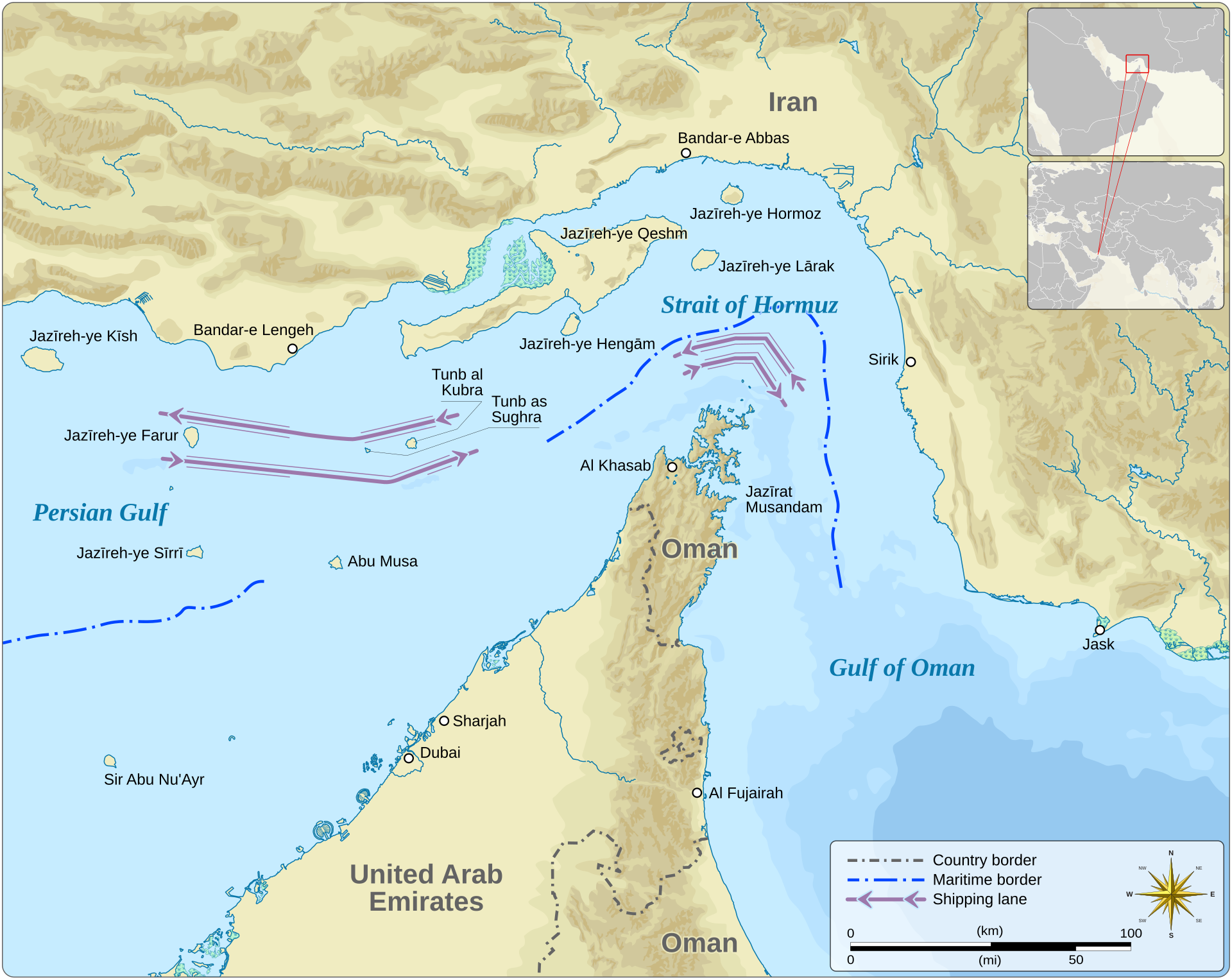
After a Sep. 8 summit at the Élysée Palace, President Lee Jae Myung said Korea and France agreed to keep coordinating so freedom of navigation in the Strait of Hormuz and the stability of global supply chains can be restored quickly. National Security Adviser Wi Sung-lac and the presidential office said the discussion was about contribution options, not a troop dispatch, and that no decision has been made.
The Strait of Hormuz is the narrow exit from the Persian Gulf. A large share of Korea’s crude oil moves through it. Washington has pressed Seoul to help keep the waterway open during the U.S.–Iran war. Tehran’s foreign ministry already posted, in Korean, that a military role there would be “direct support” for the aggressor. Lee is on a state visit to France, which with Britain has been convening the allied conversation on the strait.
At the joint press conference Lee said Korea and France would continue close coordination to restore freedom of navigation and stabilize supply chains as soon as possible. He recalled attending the April Hormuz meeting led by France and Britain and restating Korea’s willingness to contribute. Macron, per Newsis, said a multinational Hormuz mission would be peaceful and that France would cooperate with Korea once the relevant consent is in place. He did not announce a Korean deployment.
Wi Sung-lac, briefing afterward, said the two leaders discussed how Seoul could contribute to international maritime-security efforts in the strait, not troop deployment, and that Seoul is “still in the review stage.” A senior Blue House official told Newsis and Hankyoreh the same line: do not call Tuesday’s talks a troop-dispatch discussion; the review is open; nothing is decided; combat options are not what is under review. The Defense Ministry said an inspection team left for the United Arab Emirates over the weekend to assess local conditions and safety, and that the trip does not presuppose an actual deployment. The ministry also said it is not true that the United States set a November deadline for Korean assets. Any real military deployment would still need parliament. Korean media have floated a National Security Council look on Sep. 17; Wi said no course of action is set.
Separately, Lee called a protocol amending the classified-military-information agreement and work toward a mutual logistics support pact a “substantive leap” in defense cooperation. He cited the Pegase joint air drill in Seoul next week and reciprocal navy port calls later this year. The presidential office told Newsis those two agreements were long-prepared items, not a Hormuz-dispatch package written this week. Pegase “next week” is Lee’s line, not a published exercise order.
Why it matters: An ally that imports its oil through a war zone has now said, on camera in Paris, that it will keep coordinating to reopen the strait — and, in the same news cycle, that it has not decided to send forces. France is being used as a European frame for a choice Washington wants and Tehran has already labeled.
「대한민국과 프랑스는 호르무즈 해협에서의 항행의 자유와 글로벌 공급망의 안정이 조속히 회복될 수 있도록 긴밀한 공조를 계속 이어나가기로 했다」 — “The Republic of Korea and France agreed to continue close coordination so that freedom of navigation in the Strait of Hormuz and the stability of global supply chains can be restored as soon as possible.” — President Lee Jae Myung, joint press, via Newsis / Chosun.
KCNA, as reported by Yonhap on Sep. 9, 2026, said senior party and government officials visited the Kumsusan Palace of the Sun on Sep. 8 to mark the 78th anniversary of the state’s founding. Kim Jong Un did not join them. Kim received congratulatory letters from Xi Jinping and Vladimir Putin pledging to strengthen “strategic” relations. No ballistic launch and no parade are in these readouts. Kim’s absence is from the mausoleum visit, not a claim he made no statement all day.
Sept. 9 is the day North Korea marks as its founding in 1948, under Kim Il Sung. Anniversaries of this weight have in other years brought missiles, flyovers, or a parade. This one, on the evidence in hand, did not. Yonhap, citing KCNA, said officials went to the mausoleum in Pyongyang where Kim Il Sung and Kim Jong Il lie in state, bowed, and pledged to work for the “dignity and prosperity” of the country. A flower basket from Kim Jong Un was laid at the statues. He was not in the visiting party. Premier Pak Thae-song and party secretary Jo Yong-won also visited national cemeteries.
The diplomatic mail is the other half. Yonhap, citing KCNA, said Xi wrote that it is the “consistent and steadfast policy” of the Chinese party and government to defend, consolidate, and develop China–DPRK relations, and that his June visit to Pyongyang opened “a new chapter.” Putin, in a letter sent a day earlier, vowed to “further consolidate the comprehensive strategic partnership,” which he said serves both countries and a “more just and multi-polarized world order.” Sankei, citing CCTV, quotes Xi calling the two “socialist friendly neighbors who help each other and share a common destiny,” a harder phrase than last year’s “traditional friendly neighbors sharing a land border.” KCNA also listed messages from Vietnam, Laos, Cambodia, Mongolia, Sweden, Belarus, Switzerland, Zimbabwe, Singapore, and Equatorial Guinea.
Sankei adds an observation, not a KCNA announcement: work on customs facilities on the North Korean side of the New Yalu River highway bridge (Dandong–Sinuiju), unfinished as a crossing since the span was built in 2014, is being rushed, and some watchers speculate an opening around Oct. 6, the 77th anniversary of China–DPRK diplomatic ties. Oct. 6 is not a confirmed opening date. This is a Pyongyang anniversary story.
Why it matters: A nuclear-armed state spent its founding day accepting “strategic” letters from Beijing and Moscow while U.S., Japanese, and South Korean forces are still in Freedom Edge. The absence of a launch is itself a fact. The letters say the China–Russia–North Korea alignment is being restated in public, on a calendar Washington and Seoul are watching.
「中朝両国は互いに助け合い、運命を共にする社会主義の友好的隣国だ」 — “China and the DPRK are socialist friendly neighbors who help each other and share a common destiny.” — Xi Jinping, via CCTV, as quoted by Sankei, Sep. 9, 2026.
Kompas.com reported Sep. 8, 2026, that Basarnas Banten head Al Amrad said the search for a speedboat that left Carita on the afternoon of Sep. 7 with journalists covering Anak Krakatau had left the scene at 18:15 WIB and would resume Wednesday morning, widening from Carita toward the volcano. A Sep. 9 Kompas family story and The Straits Times do not agree on whether seven or eight people are missing. The outlets do not agree on a headcount. No one in these reports is confirmed dead. Indonesia’s original, Kompas, is the record.
Mount Anak Krakatau, in the Sunda Strait between Java and Sumatra, has been erupting since late Friday, Sep. 4. Ash shut Jakarta’s main airport and other fields for days. Those hubs began a phased reopen early Tuesday. That reopen was Tuesday’s file. This is a different fact: people sent to document the eruption are missing at sea.
Kompas (Sep. 8, 20:24 WIB), citing Basarnas Banten, said speedboat Arupadhatu 1 left Dermaga Pagedongan, Carita, Pandeglang, on Monday, Sep. 7, about 14:00 WIB with seven people: five journalists, one captain, one crew. The journalists named in that piece are M. Bagus Khoirunnas (Antara Banten photographer), Ari Basuki (Merdeka), Yudhis (iNews), Daus (Anadolu), and Donal (freelance). The report reached Basarnas on Tuesday at 13:55 WIB from Bayu of Antara Banten. Last position was sent Monday at 14:42 WIB to a Lampung journalist named Abay; contact cut at 15:04 WIB. Last coordinates given: 6°14'40.52"S 105°40'49.48"E, about 9.98 nautical miles from land. Al Amrad said Tuesday’s search used a Pandeglang rigid inflatable (six personnel) and KN SAR 247 Tetuka (20 personnel), sweeping from the last-contact area to Pulau Rakata and Pulau Panjang. Teams left at 18:15 WIB. The plan for Wednesday was to widen from Carita to Mount Anak Krakatau.
Kompas (Sep. 9, 10:06 WIB), a family interview in Serang, spells the boat Aripadhatu 1 and says eight people are still missing: the same five journalists plus three named crew or guides — Warta (55), captain; Surakman (60), crew; Heriyanto (49), guide. That piece dates the loss of contact to Monday, Sep. 6, afternoon, which conflicts with the Sep. 8 chronology (departure Sep. 7). Straits Times (Sep. 9), citing Basarnas, also says eight: five journalists, two crew, and a guide, departure the afternoon of Sep. 7, search paused for high waves and poor visibility, then widened Sep. 9 with boats and thermal drones. ST does not name them. Hold both counts. Neither seven nor eight is confirmed. Lintang, 47, brother of Ari Basuki, told Kompas on Sep. 9 that the last contact with Ari’s child was Monday at 13:43 WIB, and there has been no news since. He said he hopes they are found safe.
Why it matters: Anak Krakatau already stopped a major Indo-Pacific air hub. The same eruption has now put working journalists — a state wire, a Turkish state agency, and local desks — out of contact in the strait that carries ash toward Java and Sumatra. The volcano is still a navigation hazard, and the record of who is on the boat is itself unfinished.
“Rencananya besok tim akan memperluas area pencarian dari mulai Carita sampai ke Gunung Anak Krakatau.” — “The plan is that tomorrow the team will widen the search from Carita all the way to Mount Anak Krakatau.” — Al Amrad, Kompas, Sep. 8, 2026.
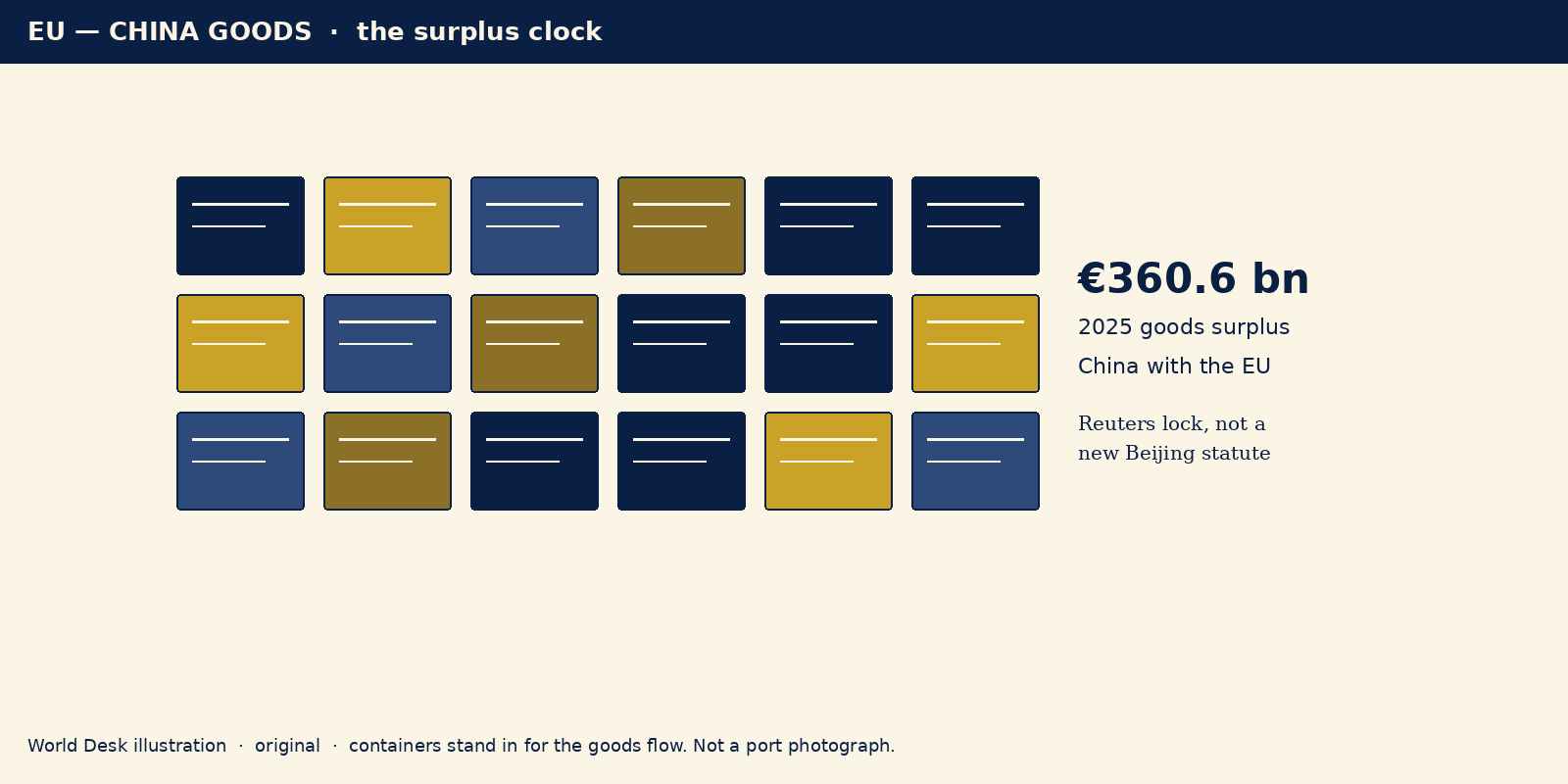
On Tuesday, Sep. 8, 2026, European Trade Commissioner Maroš Šefčovič said the European Commission will seek commitments from China to tackle a widening trade gap, and wants some initial action by early October. He was speaking at an EU-hosted panel in Berlin. EU leaders asked the Commission in June to produce results from talks with Beijing. Reuters, the lock wire, puts China’s goods surplus with the EU at €360.6 billion in 2025 — about $412 billion — up 15 percent on 2024. The surplus widened another 9 percent in the first half of 2026. Lianhe Zaobao carried the same clock on Sep. 9.
Šefčovič said the talks must cover three things: the surge of Chinese exports, barriers facing European goods in China, and Beijing’s curbs on critical supplies, especially minerals the EU needs. He named rare earths and legacy chips. He did not name which Chinese exports might be limited. He wants “pilot schemes” on a group of products so Brussels can show the consultation works. His warning was political, not technical. If this path cannot be shown to work, he said, there will be “huge political pressure to look for other solutions,” because the imbalance would be “detrimental to the future of the European economy.”
Chinese exports of textiles, chemicals, plastics, machinery, batteries, and electric and hybrid cars to the EU have jumped in the past year. The EU says much of that is overcapacity. Beijing’s line, as carried by Reuters and Lianhe Zaobao, is that hyping imbalances and overcapacity is protectionism meant to pressure and restrict China. That line is as the wires carried it, not a fresh spokesman quote fetched from mfa.gov.cn. No same-day MOFCOM or MFA reply to Šefčovič is in hand.
Why it matters: This is the other half of the China argument Washington has been making — and it is coming from Europe, not the White House. Rare earths and older chips sit inside European cars, factories, and weapons. A deadline before a Beijing trip is how the EU tells Xi, weeks before he is expected in Washington, that the surplus is no longer a talking point. It is a calendar.
“huge political pressure to look for other solutions” — European Trade Commissioner Maroš Šefčovič, as Reuters reported Sep. 8, 2026, if the consultation path cannot be shown to work.
On the morning of Tuesday, Sep. 8, 2026, Vice President Han Zheng opened the 26th China International Fair for Investment and Trade in Xiamen and said manufacturing-sector restrictions on foreign investment have been “cleared” (清零). He said China has zero-tariff treatment for 63 countries, that telecoms and medical services are opening in an orderly way, and that Beijing will keep widening “autonomous opening” so foreigners can invest more easily. The fair’s standing theme, in the foreign ministry account, is “expand two-way investment, jointly promote global development.”
Han made three asks of the room: keep building win-win deals; speed innovation as a source of growth; and keep industrial and supply chains stable against protectionism and geopolitical shocks. He called China a builder and defender of the global division of labor, not a bystander. This is the state answer sitting next to the surplus clock. Brussels is counting the surplus and the rare-earth gates. Xiamen is selling a cleared factory list and a welcome mat. Both can be true on paper: the negative list for manufacturing can be empty while European firms still say they cannot sell, and while minerals still need a license to leave. The 2024 negative-list “cleared” step is older policy restated here. Sep. 8 is not the day the list was first zeroed. Han is restating it at the fair. It is not a new statute.
Why it matters: “Cleared” does not mean a European carmaker or a U.S. chip-tool firm walks in tomorrow. It means the legal blacklist for factories is empty. The fight with Europe and Washington is no longer about whether a foreigner may own a plant. It is about who buys the output, who gets the minerals, and whose surplus piles up.
中国已对63个国家实施零关税政策,制造业领域外资准入限制已经“清零”,电信、医疗等服务业领域有序开放。 — China has implemented zero-tariff policies for 63 countries; foreign-investment access restrictions in manufacturing have been “cleared”; telecoms, medical care, and other services are opening in an orderly way. — PRC Ministry of Foreign Affairs, Sep. 8, 2026.
Taiwan’s Ministry of National Defense said that from 6 a.m. Monday, Sep. 8, to 6 a.m. Tuesday, Sep. 9 (China time), it detected 21 PLA aircraft, 7 PLA Navy vessels, and 1 official ship around the island. Sixteen of those aircraft crossed the median line and entered Taiwan’s northern, central, southwestern, and eastern air-defense identification zone. Taipei said it answered with combat air patrols, navy ships, and coastal missiles.
This is a new 24-hour board, not Tuesday’s file (27 sorties, 14 crossings, no eastern ADIZ in that tally). The new fact is the east: the Pacific side, now showing up on the air board. No same-morning PLA or Chinese defense-ministry statement answering this specific count is in hand.
Why it matters: Two nights in a row of double-digit median-line crossings is how a crisis becomes weather. The eastward slice matters more than the raw number. That is the ocean toward Japan and the Philippines, and the lane Taipei would need if the west coast ports were ever squeezed.

On Tuesday, Sep. 8, 2026, Hungarian Foreign Minister Anita Orbán said 10 members of Russia’s mission in Budapest had done work “die für Diplomaten gemäß der Wiener Konvention inakzeptabel sind” — “unacceptable for diplomats under the Vienna Convention” — and that Hungary had told them to leave. FAZ/dpa reported the line. Prime Minister Péter Magyar wrote, “Wir verteidigen unsere Souveränität” — “We are defending our sovereignty.”
Orbán — no relation to Viktor Orbán, whom Magyar’s party defeated in April — said the step protects Hungary’s “Sicherheit und Souveränität,” security and sovereignty, and does not mean breaking relations. Budapest still wants “den notwendigen Dialog,” the necessary dialogue. Russian Foreign Ministry spokeswoman Maria Zakharova told Tass the reply will be “hart und schmerzhaft” — “harsh and painful,” as FAZ/dpa carried it. Neither side has published the alleged acts. A departure deadline was not stated.
Under Viktor Orbán, Hungary was the EU capital that almost never expelled Russian diplomats, even as other members cleared spy networks after the full-scale invasion of Ukraine. Magyar’s government is doing in one stroke what Budapest refused for years.
Why it matters: Hungary sits inside NATO and the EU. A Russian mission that could work with unusual freedom in Budapest was a hole in Europe’s counter-intelligence wall. Closing it does not end the war. It does change who can operate on the alliance’s inside.
“die für Diplomaten gemäß der Wiener Konvention inakzeptabel sind” — “unacceptable for diplomats under the Vienna Convention.” — Foreign Minister Anita Orbán, as FAZ/dpa reported Sep. 8, 2026.
“Wir verteidigen unsere Souveränität.” — “We are defending our sovereignty.” — Prime Minister Péter Magyar.
“hart und schmerzhaft” — “harsh and painful.” — Maria Zakharova, as Tass, carried by FAZ/dpa.
On Tuesday, Sep. 8, 2026, European Commission President Ursula von der Leyen said member states had agreed a derogation so Ukraine can buy “crucial products for Patriot air defence systems,” and that the next disbursement of €3.2 billion “will enable Ukraine to better protect its skies from Russia’s indiscriminate attacks” — a line she issued with NATO Secretary General Mark Rutte. European Pravda quoted her. EU Perspectives carries the same post.
The money sits inside the EU’s support loan for Ukraine, which runs up to €90 billion through the end of 2027. The usual rule prefers European or Ukrainian kit. Patriot interceptors are American, and European plants cannot fill the gap fast enough for this winter. Von der Leyen said this slice comes on top of €8.4 billion already paid out under the loan, including for air defence. European Pravda, citing EU sources, said the political decision is made and the technical release is expected by Sep. 11. That is pending, not paid. The cash is not reported as already in Kyiv’s account. Missile count and delivery dates are not in the von der Leyen text.
Why it matters: Russia is hitting Ukrainian cities and the power grid as winter approaches. Europe is paying — and, for this tranche, buying American missiles because its own factories are late. The winter sky over Kyiv is now a test of whether Brussels will suspend “buy European” when the alternative is a blackout.
“will enable Ukraine to better protect its skies from Russia’s indiscriminate attacks” — European Commission President Ursula von der Leyen, with NATO Secretary General Mark Rutte, on the next €3.2 billion disbursement, as European Pravda and EU Perspectives reported Sep. 8, 2026.
Overnight into Wednesday, Sep. 9, 2026, Ukrainska Pravda reported that Russian forces attacked a checkpoint on Ukraine’s border with Moldova, killing two people and halting operations there, and that a Russian drone hit a 24-storey residential building in Kyiv, injuring six. Day 1659. The checkpoint is not named in the blurbs locked this pass, and it is not clear whether operations reopened.
Moldova is not in the EU, but it is an EU candidate squeezed between Ukraine and Romania — NATO’s edge. A checkpoint is a civilian crossing, not a trench. Closing it strands people and trade on a border Europe has spent years trying to keep open and lawful. The same night, Ukrainska Pravda said Russia fired Iskander missiles, Banderol loitering munitions, and 196 drones, with 165 drones downed, and that Ukraine struck the Russian naval base at Novorossiysk. Those figures are only what Ukrainska Pravda reported.
Why it matters: The war is no longer only a line in Donbas. It is reaching a second country’s doorstep and the apartment blocks of the capital, on the same night Europe agreed to fund more Patriot shots. If the Moldova crossing stays shut, the refugee and smuggling pressure moves onto Romania and the EU.
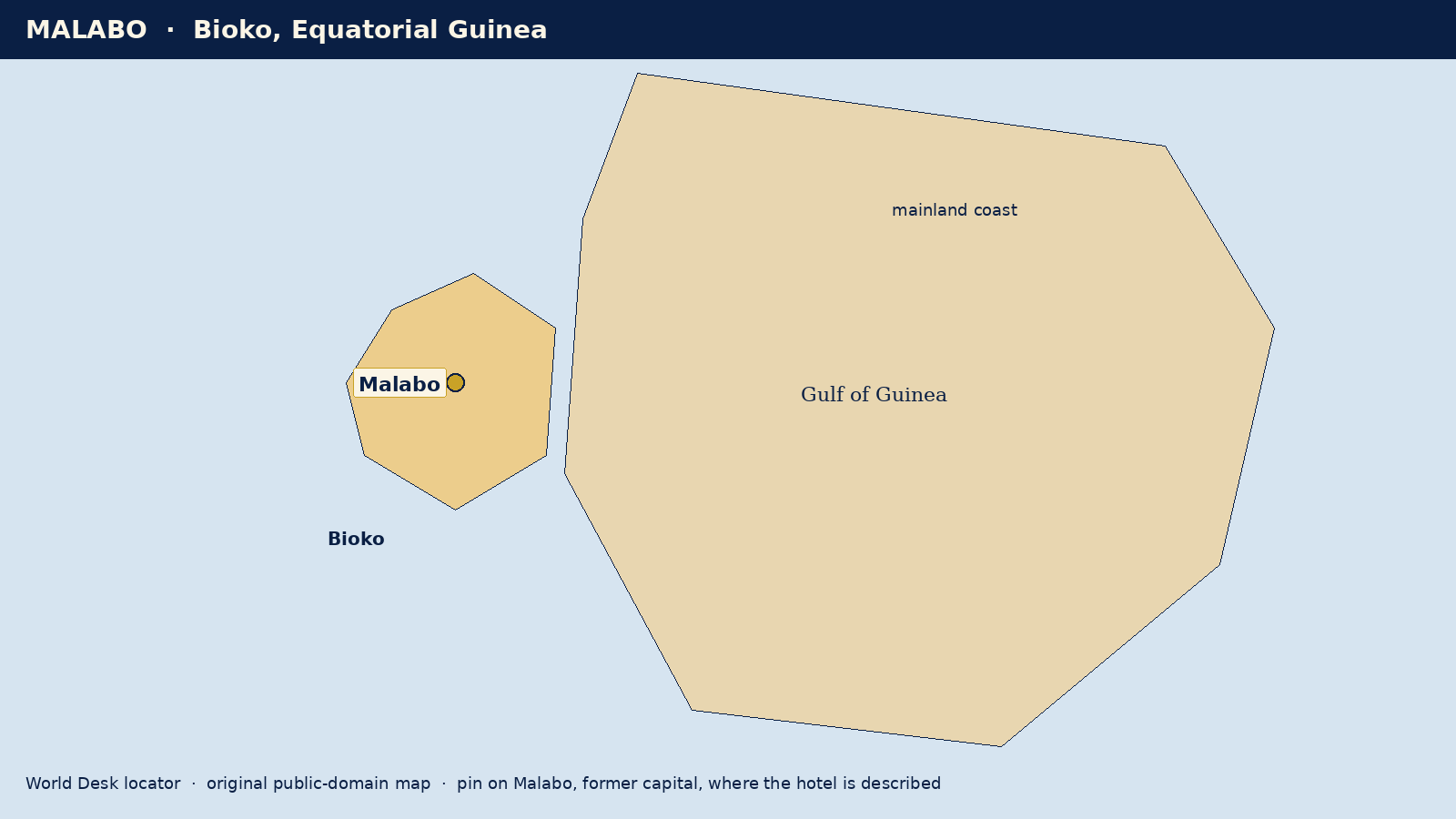
On Sep. 8, 2026, Reuters (Robbie Corey-Boulet, Dakar) reported that police in Equatorial Guinea pulled firearms on migrants deported from the United States, according to three witnesses and video footage shared with the wire. The altercation was Saturday, Sep. 5, at a hotel in Malabo, the former capital, where the deportees are being held. It began as a dispute over access to mobile phones. Men in shirts reading “National Police” pointed what appeared to be semi-automatic assault rifles at deportees inside the hotel entrance. One migrant appeared to be kneeling; others screamed. Reuters reviewed the footage and said it could not independently verify what happened before the confrontation. Equatorial Guinea did not respond to Reuters.
An Egyptian deportee, Ahmed Soliman, told Reuters he started filming after officers ignored a Cuban man’s request for a confiscated phone so he could call relatives and a lawyer. Within 30 seconds, Soliman said, officers rushed him and others, grabbed his neck and shirt, and tried to take the phone. “They cocked their guns, took it off of safety, pointed their guns at me telling me to get on my knees, with my hands up… I had to remain in that position for 10-15 minutes,” he said. He said the hotel director then arrived and the group was allowed back to their rooms.
Lawyer Meredyth Yoon of Asian Americans Advancing Justice-Atlanta and two deportees told Reuters 31 people are currently held at the hotel. Last month, five people the U.S. tried to send to Liberia refused to get off the plane and were taken to Equatorial Guinea instead. Third Country Deportation Watch, a count by Refugees International and Human Rights First, counted 53 people deported to Equatorial Guinea under the third-country deal between November 2025 and July, from 11 African countries plus Georgia, Jamaica, Brazil, and Cuba. Label that 53 as the tracker’s count, not as a U.S. government figure.
A U.S. Homeland Security spokesperson said the administration is “utilizing all lawful options” and that “when an individual is no longer in ICE custody then ICE will no longer be responsible for them.” A State Department spokesperson said the U.S. would “use all legal means to remove those with no right to remain in our country.” Yoon told Reuters: “Once again, evidence demonstrates that deporting people to Equatorial Guinea is putting their lives in danger.” Three deportees told Reuters they had been encouraged to return to countries from which U.S. immigration judges had already found they could face torture, and were offered no alternative. Reuters said it could not independently verify that claim.
Why it matters: This is the Africa end of a U.S. policy, not a local police blotter. The Saturday scene is what “no longer our custody” looks like when the receiving state is a closed, oil-rich dictatorship and the people on the floor include Cubans, Africans, and others who already cleared a U.S. fear test.
“They cocked their guns, took it off of safety, pointed their guns at me telling me to get on my knees, with my hands up… I had to remain in that position for 10-15 minutes.” — Ahmed Soliman, Egyptian deportee, as Reuters reported Sep. 8, 2026.
“when an individual is no longer in ICE custody then ICE will no longer be responsible for them.” — U.S. Homeland Security spokesperson, as Reuters reported Sep. 8, 2026.
On Tuesday, Sep. 8, 2026, AFP (Khartoum, issued 16:59) reported that a drone strike killed 13 people and wounded 22 outside a courthouse in Umm Rawaba, an army-held town in North Kordofan. A medical source at the local hospital told AFP the toll, revising an earlier count of 12 after one more person died. Witnesses said the area was crowded with residents finishing legal and administrative work. One witness told AFP: “I was near the courthouse when I saw the drone hit a tree outside the building.” Another said: “After the drone hit, we tried to save people, but some died at the scene.” There was no immediate comment from the Rapid Support Forces.
Xinhua the same night (Khartoum, Sep. 8, filed 02:55 on Sep. 9) quoted the Sudan Doctors Network calling the strike “a new massacre” and blaming the RSF. An eyewitness told Xinhua the attack was about 1 p.m. local time, with three missiles hitting the courthouse yard, a small market, and nearby homes. The death toll is the AFP medical source. The blame is the Doctors Network, via Xinhua. The RSF was silent in the AFP file.
The wider lock, from the same AFP file: drone strikes by both sides have killed more than 1,100 people this year, according to UN figures cited by AFP. Aid workers estimate more than 200,000 killed since the war began in April 2023. Kordofan is the road between army-held central Sudan and Darfur, where the RSF consolidated last year. This week a U.N. fact-finding mission warned that outside support is making both sides’ operations more advanced. Chairman Mohamad Chande Othman: “Protecting Sudan’s civilians requires action not only against those fighting the war, but also against the individuals, entities and networks that enable it to continue.” AFP said that warning coincided with a U.S. call for the Security Council to expand the Darfur arms embargo to all of Sudan. The UAE is most commonly accused of backing the RSF through neighbors and denies it. Egypt, Turkey, and Saudi Arabia have stood with the army, AFP reported, with reports of Egyptian-Turkish support — treat the support reports as AFP’s attribution, not a new courtroom finding.
Why it matters: Monday’s file was the chemical-weapons paper trail. This is the next day of the same war, in a different place: a courthouse queue, a drone, a road that decides whether Darfur’s RSF state can be cut off from the Nile. A Darfur-only arms embargo does not cover the Kordofan strikes now killing civilians in army towns.
On Sep. 9, 2026, Reuters (Nairobi/Cape Town) reported that Aliko Dangote’s planned 700,000-barrel-per-day refinery at Lamu, Kenya, faces a set of problems the Nigeria plant did not — above all, where the crude comes from. Kenya, unlike Nigeria, currently has no commercial output. The company will hold a groundbreaking at the end of this month and hopes to finish by 2030. Dangote has said he expects the plant to cost $15 billion to $16 billion.
Devakumar Edwin, vice president of Dangote Industries, told Reuters there were no regulatory, finance, or feedstock challenges to overcome. The company has said the project will improve regional fuel supply and energy security. The feedstock claim is the contested sentence. Reuters said President William Ruto’s chief economic adviser has told Kenyan media the plant could secure 600,000 barrels a day from inside East Africa — South Sudan, Uganda, and Kenya. That figure is Reuters citing the adviser via Kenyan media, not a signed supply contract.
None of those barrels is simple. Kenya has proven reserves and has struggled for years to start producing; small-scale output is expected later this year, Reuters reported, not a refinery diet. A crude line from South Sudan and Kenya’s Lokichar Basin to Lamu “remains a distant prospect,” and South Sudan’s existing exports have been broken by the war in Sudan. Ugandan crude is tied to the pipeline toward Tanzania, not Lamu. Lamu Port, Reuters noted, does not yet have the oil terminals a plant of this size would need.
Why it matters: A 700,000-barrel plant is not a Kenyan jobs story. It is a bet that East Africa can refine its own fuel while Gulf supply is under fire. If the crude never arrives, Lamu is a ceremony. If it does, the barrels will come through a war or a rival corridor — the same neighborhood as the Hormuz shock, one ocean over.
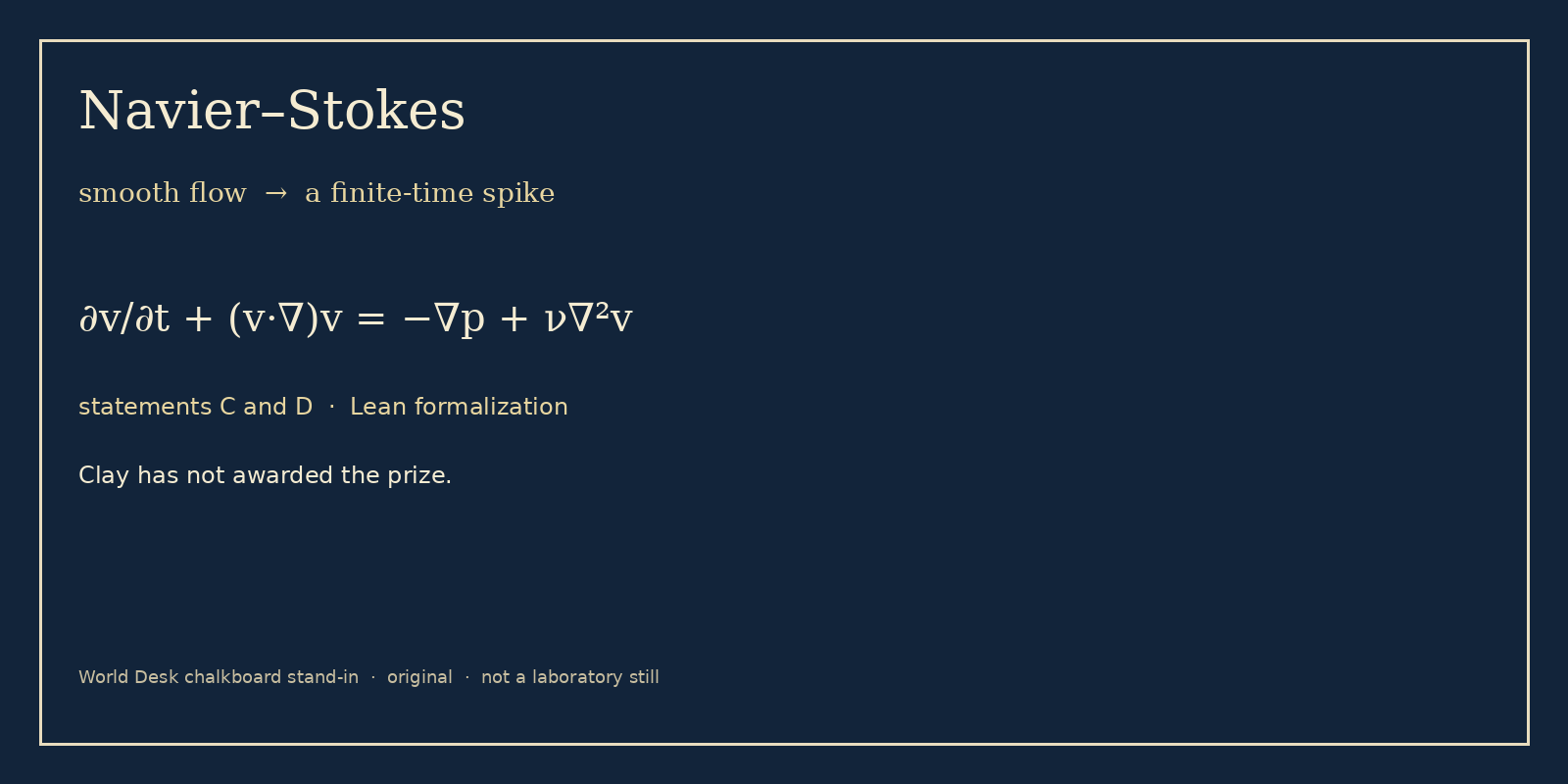
Layman: Air and water follow a set of equations written in the 1800s. Mathematicians have never proved whether a perfectly smooth flow can suddenly tear itself into an infinite spike while the energy stays finite. OpenAI says a private swarm of agents produced a proof, checked in a computer language called Lean, that such a spike can form. The Clay Mathematics Institute has not awarded the $1 million prize, and OpenAI says it will not claim it. The same day, two people who work the same equations said the lab should have credited related work. OpenAI says its researchers and agents did not see that work.
On Sep. 8, 2026, OpenAI said an internal system — a model the company describes as significantly more capable than GPT-6 Astra — produced a proof and a Lean formalization showing that smooth three-dimensional fluid motion governed by the Navier–Stokes equations can develop a singularity in finite time. OpenAI says that resolves statements “C” and “D” of the Clay Mathematics Institute’s Navier–Stokes Millennium Prize Problem. The company said it does not intend to claim the $1 million prize. MIT Technology Review the same day reported that NYU mathematician Tristan Buckmaster and Anthropic employee Levent Alpöge accuse OpenAI of failing to credit related work, which OpenAI denies. The company has not named a public model. The Clay Institute has not awarded the prize.
Navier–Stokes is the 19th-century rulebook for how water and air move — the same equations used to design aircraft, forecast weather, and study blood flow. For about 90 years, mathematicians have not known whether a perfectly smooth start can blow up into infinite speed in finite time while energy stays finite. In 2000 the Clay Institute put that question on a list of seven prize problems. OpenAI says a swarm of coordinating agents, on the order of 10,000 working at once, reached a resolution on Sep. 5 after an effort that began Sep. 1. Lean checking took another 17 hours on GPT-6 Astra. The company says the agents sent 2.7 million messages and used about 130 billion output tokens on this problem alone.
The fight is the newspaper fact beside the claim. OpenAI says the run began after a rumor it later tied to Alpöge and Buckmaster. After Lean verification on Sep. 6 it reached out expecting they had also solved Navier–Stokes, then learned they had a result on the related forced Euler problem. OpenAI says researchers and agents did not see that work until it was public, offered them the prompts and later the proof, and recognizes their priority on forced Euler — while adding it cannot rule out that de-identified product-use data helped improve its models. MIT Technology Review reports Buckmaster posted a document describing a choice OpenAI employees put to him: publish and OpenAI would release the next day, or collaborate on a paper that left Alpöge off because he works at Anthropic. Chief research officer Mark Chen denied that agents or staff accessed their transcripts. Brown mathematician Javier Gómez-Serrano told MIT Technology Review that very few mathematicians will have resources of that scale. UCLA’s Terence Tao has warned that solving open problems by private AI, without showing the wrong turns, can rob the field of the ideas those struggles usually produce. Independent peer review of the Lean proof is not in hand. Exact dollar cost of the run is not locked beyond MIT Technology Review’s “millions.”
Why it matters: This is not a weather app getting smarter. It is a private lab claiming a public math prize-problem with an unreleased model, while the people who work the same equations argue about who led whom. Who owns the next theorems, when only frontier labs can afford the run, is now a global question — not a campus one.
On Sep. 8, 2026, Google DeepMind said it is releasing AlphaGenome Atlas, a free academic portal of precomputed predictions for how 9 billion single-nucleotide variants — every possible one-letter change in the human genome — affect molecular biology, plus an AlphaGenome Variant Impact score that folds AlphaGenome and AlphaMissense into one ranking number. The company said the set is about 1 petabyte, more than 30 times the AlphaFold Database, and is not approved for clinical use. This stays on the AI page. It is a lab tool, not a therapy.
A single-letter DNA change is one swapped chemical letter in the genetic code. There are on the order of 9 billion such possible swaps. No lab can test each one in a dish. DeepMind’s earlier AlphaGenome model already guessed, for a given variant, how it might change gene regulation. Atlas precomputes those guesses so a researcher can look them up instead of running the model from scratch. The score is a single number meant to rank which variants look most disruptive, including in the 98 percent of the genome that does not directly code for proteins — where most trait-linked variants sit.
DeepMind said collaborators at the Broad Institute (Laura Covill, Anne O’Donnell-Luria, GREGoR Consortium) used the score to flag a DNM1 splice variant tied to epileptic encephalopathy that earlier work had missed, and that Exeter Medical Research Council fellow Gareth Hawkes applied Atlas to more than 54,000 UK Biobank genomes and reported 22 percent more non-coding associations, including signals near PLA2G7 and EGLN1. Treat those case results as company-reported collaborator work, not as a new drug approval. The page itself says the atlas is not a substitute for medical advice and is not validated for clinical use. A commercial Cloud version is “soon.” Independent journal write-up of the DNM1 and UK Biobank results is not in hand. No diagnostic accuracy rate is published here.
Why it matters: This is a research map for scientists hunting rare-disease causes and common-trait clues, not a test a doctor can order tomorrow. Who holds the lookup table for every possible letter-swap in human DNA is a global science fact — and it is not a Health-page treatment claim.
On Sep. 8, 2026, 量子位 reported that 王云鹤 (Wang Yunhe), former director of Huawei’s Noah’s Ark Lab and head of its Pangu models, has released NeoHorse-1 — 4-billion and 9-billion parameter “agent-native” models from his startup 基元律动 (Base Dynamics / Jiyuan Lüdong). The company’s technical report, as 量子位 carried it, says agent-style post-training lifted the 4B model’s macro-average score from 58.94 to 64.87, past its Qwen3.5-4B base, on a 10-benchmark mix of tool use, code, and instruction following. Treat that lift as the company technical report. It is not an independent audit. No valuation and no U.S. product price are in the report.
An agent is software that does not just answer a question. It calls tools, reads what the world sends back, notices it failed, and tries another path. Wang’s firm has been selling the dispatcher — a routing harness (OpenSquilla / TokenRhythm) that picks which model should take the next step. NeoHorse is the new move: take the logs of those handoffs, including the failures, and train a smaller model to do the reliable middle of the job so the expensive model is called less often. Compute support came from 无问芯穹. Tsinghua and Peking University teams joined the training-method work, 量子位 said. This is one closed loop of “run, score, update,” with humans still setting the rewards, not full recursive self-improvement.
Why it matters: The last two nights covered OpenAI’s own agents doing research inside one U.S. lab. This is the Chinese industrial answer taking shape — a named founder who ran a national-champion model program now arguing that the valuable asset is not one giant model but the record of many models failing and recovering.
「王云鹤创业后交出首个模型」 — “After founding his company, Wang Yunhe hands in his first model.” — 量子位 headline, 衡宇, Sep. 8, 2026, 10:14.


On Sep. 8, 2026, the Centers for Medicare & Medicaid Services said it is barring 11 durable medical equipment, prosthetics, orthotics, and supplies companies with more than $3.4 billion in suspected fraudulent billing in 2025–2026 from future Medicare Advantage (Part C) and Part D payments. CMS said the firms had no claims history before 2025, used improper billing, billed equipment for already-deceased beneficiaries, and “supplied” gear beneficiaries never requested or received. Four of the suppliers had already been revoked from Original Medicare and then billed Medicare Advantage instead.
Durable medical equipment is the everyday gear Medicare pays for so people can stay home or stay mobile — catheters, braces, orthotics, and similar supplies. When a supplier bills for equipment a living senior never ordered, or bills for someone who has already died, the money comes out of the Medicare Trust Funds that every payroll tax and Part B premium helps fill. CMS said it is placing all 11 suppliers on the Preclusion List — a federal ban list that stops Medicare Advantage and Part D plans from paying them — working with the HHS Office of Inspector General, after concluding their conduct was detrimental to the Medicare program. CMS Administrator Dr. Mehmet Oz framed the push under the White House Anti-Fraud Task Force.
Two cases show the scale CMS says it stopped before checks cleared. A Florida supplier submitted about $18.4 million in catheter claims across two days in December 2025 — $6.1 million for 500 beneficiaries, then $12.3 million for 777. A Texas orthotics company submitted about $5.5 million, with investigators finding nine claims dated after beneficiaries’ deaths and six living beneficiaries who said they did not know the ordering providers, had never heard of the company, and did not need the braces. For seniors: this is not a change to covered equipment benefits. It is a program-integrity action. Watch mail and Explanation of Benefits statements for gear you did not order. CMS describes payments stopped and future Medicare Advantage and Part D bars, not a recovered-dollar total or a final criminal conviction tally. The company names are not in the release. The share of the $3.4 billion that was Medicare Advantage versus Original Medicare versus Part D is not broken out.
Why it matters: Medicare Trust Fund integrity is the model aging democracies watch when they ask whether a health program can still police itself. Billing the dead, then walking the same claim into a private plan, is how fraud outruns a revocation letter.
On Sep. 8, 2026, full results from AstraZeneca’s replicate Phase 3 OBERON and TITANIA trials — presented at the European Respiratory Society Congress and published the same day in the New England Journal of Medicine — showed that tozorakimab cut moderate and severe chronic obstructive pulmonary disease exacerbations versus placebo. The dose is 300 milligrams under the skin every four weeks, on top of inhaled standard care. In former smokers, the primary population, the cuts were 29 percent and 34 percent. In the overall population of current and former smokers, the cuts were 30 percent and 29 percent. A U.S. Biologics License Application for the drug as add-on COPD maintenance sits under FDA Priority Review, with an expected decision window in the first quarter of 2027. Filings are also under review in Europe and China. This is not an approved pharmacy option. It is not a reason to stop an inhaler. No list price and no Medicare coverage are stated.
COPD is a long-term lung disease that makes it hard to empty air from the lungs — often, but not always, after years of smoking. Flare-ups are the bad weeks when breathlessness, cough, and mucus spike and send people to urgent care or the hospital. They drive disability and death worldwide. Tozorakimab is an experimental monoclonal antibody aimed at interleukin-33, an inflammation messenger tied to airway swelling and mucus. Unlike some existing COPD biologics that work best when a blood marker called eosinophils is high, AstraZeneca and the trial investigators say benefit showed up across blood-eosinophil levels and lung-function stages. Co-lead authors Frank C. Sciurba, M.D., of the University of Pittsburgh / UPMC, and Henrick Watz, M.D., of the University of Luebeck, framed the New England Journal of Medicine package as a new strategy against exacerbation burden. Pitt’s research release said more than 1,700 patients took part and were followed for a year on drug or placebo plus standard inhaled therapy. Company programme materials elsewhere cite 2,306 across both trials. The two participation figures are not forced into one number here.
Safety in the company and academic summaries was generally similar to placebo, with injection-site reactions more common on the drug. Pooled blood-eosinophil subgroup cuts — 23 percent below 150 cells; 34 percent at or above 150; 43 percent at or above 300 — come from the company readout. Attribute them there, not as lay advice. The exact journal DOI and absolute exacerbation rates are not in hand.
Why it matters: COPD is among the leading global killers. A twin-trial cut of roughly a third in flare-ups, still investigational until the FDA acts, is the next chapter in a multibillion biologics race — and it is a Health story, not an AI-model claim.

On Sep. 8, 2026, the Cybersecurity and Infrastructure Security Agency added two Microsoft Windows flaws to its Known Exploited Vulnerabilities catalog on evidence of active exploitation. CVE-2026-81963 is a link-following flaw in the Windows Update Stack. CVE-2026-85880 is a heap-based buffer overflow in Windows Advanced Local Procedure Call. Federal civilian agencies have a due date of Sep. 22, 2026. The catalog entry for CVE-2026-85880, fetched this morning, carries that due date. NIST’s National Vulnerability Database reprints the same Sep. 22 date for CVE-2026-81963. The practical point for a senior reader is smaller than any record tally: open Windows Update and install. Who is using the bugs, and how widely, is not in the pages fetched.
Patch Tuesday is the second Tuesday of the month, when Microsoft ships the security fixes most home and office Windows PCs are waiting on. A “known exploited” flaw, in CISA’s words, is one attackers are already using. Privilege escalation means a program that should have limited rights becomes SYSTEM, the account that can change almost anything on the machine. The Update Stack is the software that installs Windows updates. Advanced Local Procedure Call is a Windows messaging channel programs use to talk to one another. NIST, quoting Microsoft as the numbering authority, describes CVE-2026-81963 as improper link resolution in that update stack, letting an authorized attacker raise privileges locally. Microsoft’s score on that page is 7.8, high. CISA’s catalog entry for CVE-2026-85880 says Windows ALPC contains a heap-based buffer overflow that also allows a local privilege raise. The Register (Jessica Lyons, published 01:25 UTC Sep. 9 — 9:25 p.m. ET Sep. 8) quotes Microsoft on the ALPC bug: an attacker who can run code in a low-privilege AppContainer could escape that sandbox and raise privileges, with no extra click required. That is Microsoft’s description of impact, as The Register printed it — not a how-to.
The headline number is a count the outlets do not share, not a Microsoft invoice. Krebs on Security (posted Sep. 8, 2026, 5:44 p.m.; timezone not labeled) said Microsoft issued updates to plug at least 974 security holes, called it the biggest single patch batch ever, counted 113 of them “critical,” and put the 2026 running total above 2,600. The Register (Sep. 9) said 974 CVEs in Microsoft’s own products. Ars Technica’s Dan Goodin (Sep. 8, 5:11 p.m.; timezone not labeled) wrote “roughly 972,” and reported researcher Dustin Childs’s count of 972, or 997 if Edge’s borrowed Chrome fixes are included, with 112 rated critical and 2,760 Microsoft fixes already this year. This report does not pick a winner. Microsoft’s Security Update Guide page did not render a release-note total this pass. No official CVE grand total is locked from Microsoft itself, and none is invented. CISA’s Sep. 8 alert also added an Adobe Commerce and Magento template flaw and an N-able N-central bug. The Register said the Adobe hole is already being used against online shops and that Google patched a separate Chrome zero-day, CVE-2026-85046, on Sep. 3 while Microsoft had still not published an Edge advisory for it. No Chrome or Edge version number is locked here. Krebs and Ars both say Microsoft and others credit AI-assisted bug hunting for the flood. That is context for why the pile is so large, not a lab story. This is consumer and enterprise cyber — update the PC.
Why it matters: Federal civilian agencies are on a dated remediation clock, and the same Windows machines sit in hospitals, banks, and homes. Two flaws already in use matter more than which analyst’s spreadsheet is one hole higher.
The Register (Simon Sharwood, published Sep. 7, 2026, 02:05 UTC — 10:05 p.m. ET Sep. 6) reported that Thailand’s National Economic and Social Development Council decided last week to pause all datacenter builds and development approvals while it writes a single set of rules. Prime Minister and Interior Minister Anutin Charnvirakul said the facilities matter to the economy but the government does not have good data on how many operate or what is in the pipeline. No count of halls is in the Register account. No company is named as halted. This story uses only that Register page.
A datacenter is a warehouse of computers that runs other people’s apps, clouds, and — increasingly — the training and running of AI systems. Those halls use large amounts of electricity, water, and land. The Register said Thailand’s Council announced the pause in a communiqué after a Friday meeting of its Datacenter Business Policy Committee. Anutin, who holds both the prime ministership and the interior portfolio, called datacenters important and admitted the data gap. The Register framed that admission against “community disquiet” already visible in Thailand — that is the outlet’s framing. Operators and investors were given a week to submit information on their operations so the government can move faster on one regulatory framework. Bangkok also wants a plan for how many facilities the country needs, and what form they should take.
The industrial starting point, as The Register reported it, is concrete. Datacenters using more than 2 megawatts of electricity — a large industrial load, not an office closet — would be treated as industrial businesses. The Council is considering “resource utilization fees” so indirect costs from the builds do not raise costs for the public, plus an assessment process so new halls “create the most benefit for Thailand.” The government’s stated hope is an ecosystem that creates “tangible and sustainable added value for the Thai economy.” The Thai communiqué itself is not in hand, so this story stays inside what The Register printed. The angle is datacenter capacity and power, not an AI model.
Why it matters: Southeast Asia’s place in the global datacenter race now includes a government stopping the pour because it cannot count the halls. The cloud is not weightless. Power and local cost are the fight.
Reuters (Sep. 8, 2026, 1:15 p.m. UTC — 9:15 a.m. ET) reported that Qualcomm said Amazon could buy up to $60 billion of its AI data-center chips and related products under a long-term partnership covering custom chips for AI inference and optical connectivity up to 1.6 terabits per second. The Register (Tobias Mann, Sep. 8, 2026, 18:29 UTC — 2:29 p.m. ET) independently reported Amazon Web Services tapped Qualcomm for “customized” silicon for AI inference and 1.6 Tbps optical networking, and that purchases and other commercial commitments could total up to $60 billion in payments through September 2036 — while noting the companies offered few details. This is a chips-and-optical story. It is not a model lead. It does not belong on the AI page. No first delivery date, process node, or share of Amazon’s spend is locked. No share-price move is filed here.
Inference is the work of running an already-trained AI system, as distinct from the longer job of training it. Optical connectivity is the light-based cabling that moves data between machines inside a data center. 1.6 terabits per second is the top speed the companies are talking about for those links, not a measured result from a shipping rack. Qualcomm is still best known for phone chips. The $60 billion figure is what Qualcomm said Amazon could buy — a ceiling on purchases, not cash already received. Reuters said the optical business follows Qualcomm’s $2.4 billion purchase of a company it spelled AlphaWave, after which that firm’s CEO, Tony Pialis, became Qualcomm’s data-center chip chief. The Register spelled the related firm Alphawave Semi and did not restate a price. The two spellings are left as each outlet printed them.
The Register’s job on the same day was to say how little is actually specified. Tobias Mann wrote that AWS tapped Qualcomm for customized silicon and 1.6 Tbps optical gear, quoted Qualcomm CEO Cristiano Amon’s statement as saying “absolutely nothing about the nature of the deal,” and said the Register had asked both companies for more and had not heard back at publication. The Register said Qualcomm’s networking piece is the clearer half: Amazon would use Qualcomm serializer-deserializers and optical digital signal processors to raise port speeds to 1.6 Tbps, and read that as AWS adding Qualcomm as a source of optical plugs or near-packaged optics. High-speed optical links, the Register wrote, have become a supply-chain hurdle as AI halls grow from a few dozen accelerators in a rack to hundreds or thousands across racks. Register also noted Qualcomm will expand use of Amazon’s Bedrock tools for chip-design work — a company plan, not a model launch. Register’s “more buzzwords than compute” is the outlet’s judgment, not a fact.
Why it matters: Who else besides the incumbent can sell the silicon and the links inside the AI buildout is an industrial question. A phone-chip maker and the largest cloud are trying to lock a multi-year supply of custom chips and the optical cables that have become a bottleneck. Capacity, not a model card.